

Every idea begins in quiet darkness - eager to ask
Every idea begins in quiet darkness - eager to ask
What
& Why
What
& Why
OUR
Services
manifold
Design
manifold
Design
manifold
Design
manifold
Design
Studio
we begin with a quiet question: what might this ( ___ ) become?
X — the unknown — an open field where ideas wait without names.
Y — asking why, and why not, listening closely, to find direction in complexity and uncertainty.
in this gentle flow, we do not dictate; we discover side by side, shaping each design as a shared journey. In the end, what we build is not just ours — it belongs to everyone who helped guide it into being.
this is how the unknown becomes real, how a question turns into a story, and how we find meaning in the places we create.
OUR
WORKS
Featured
Projects
DESIGN
All
Architecture
Public art
Product
Public Light Art
Whale Fall
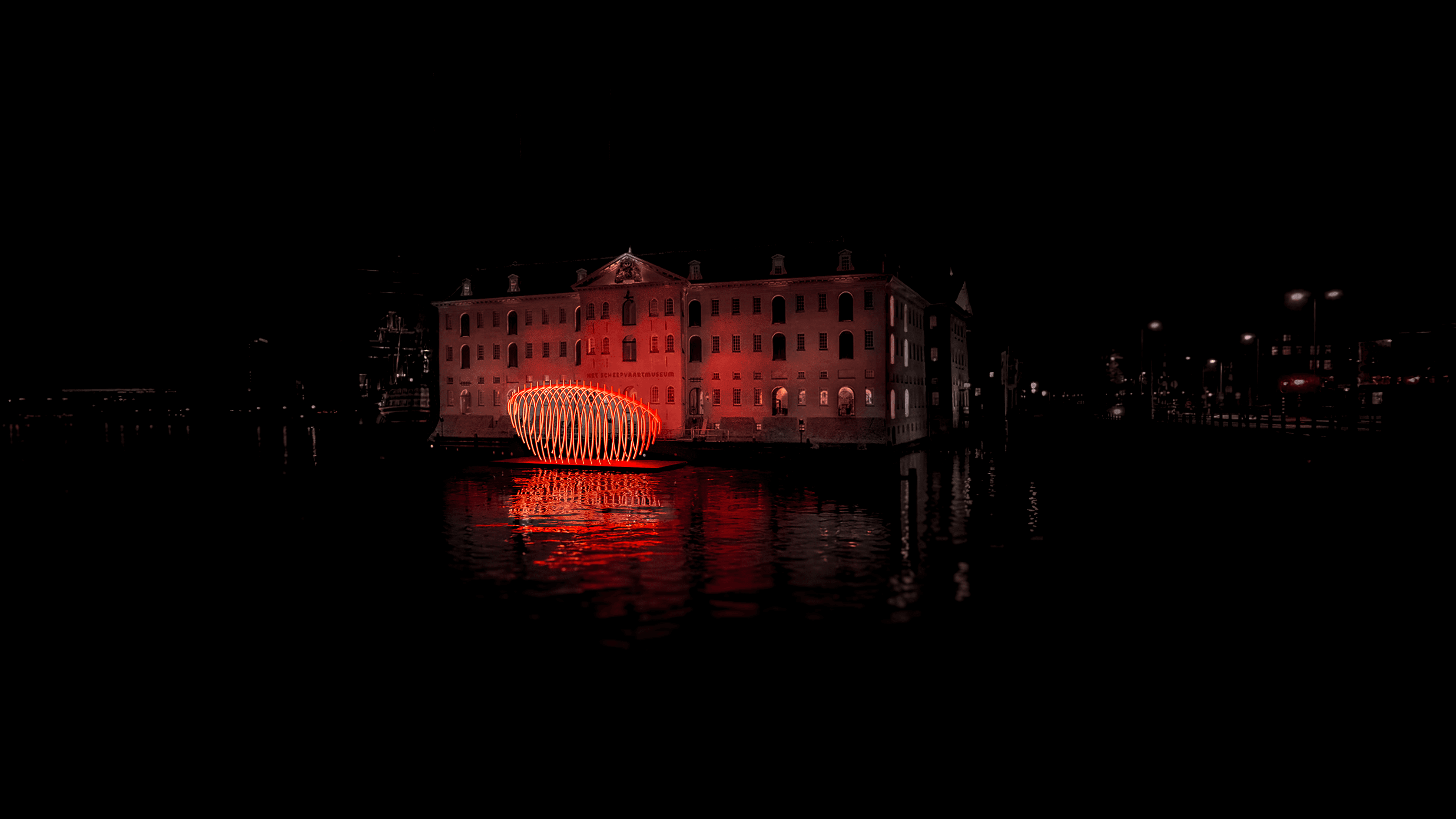
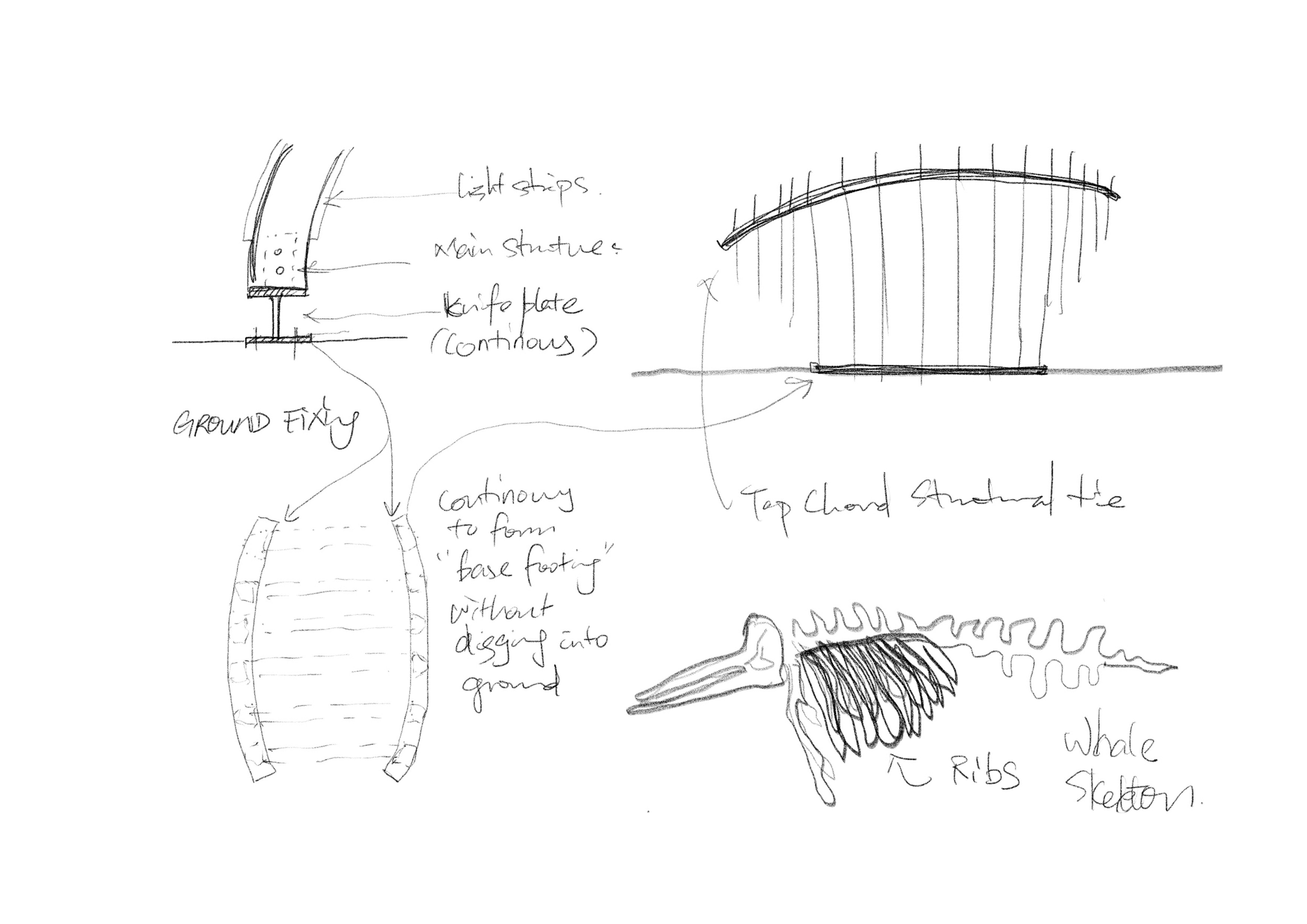
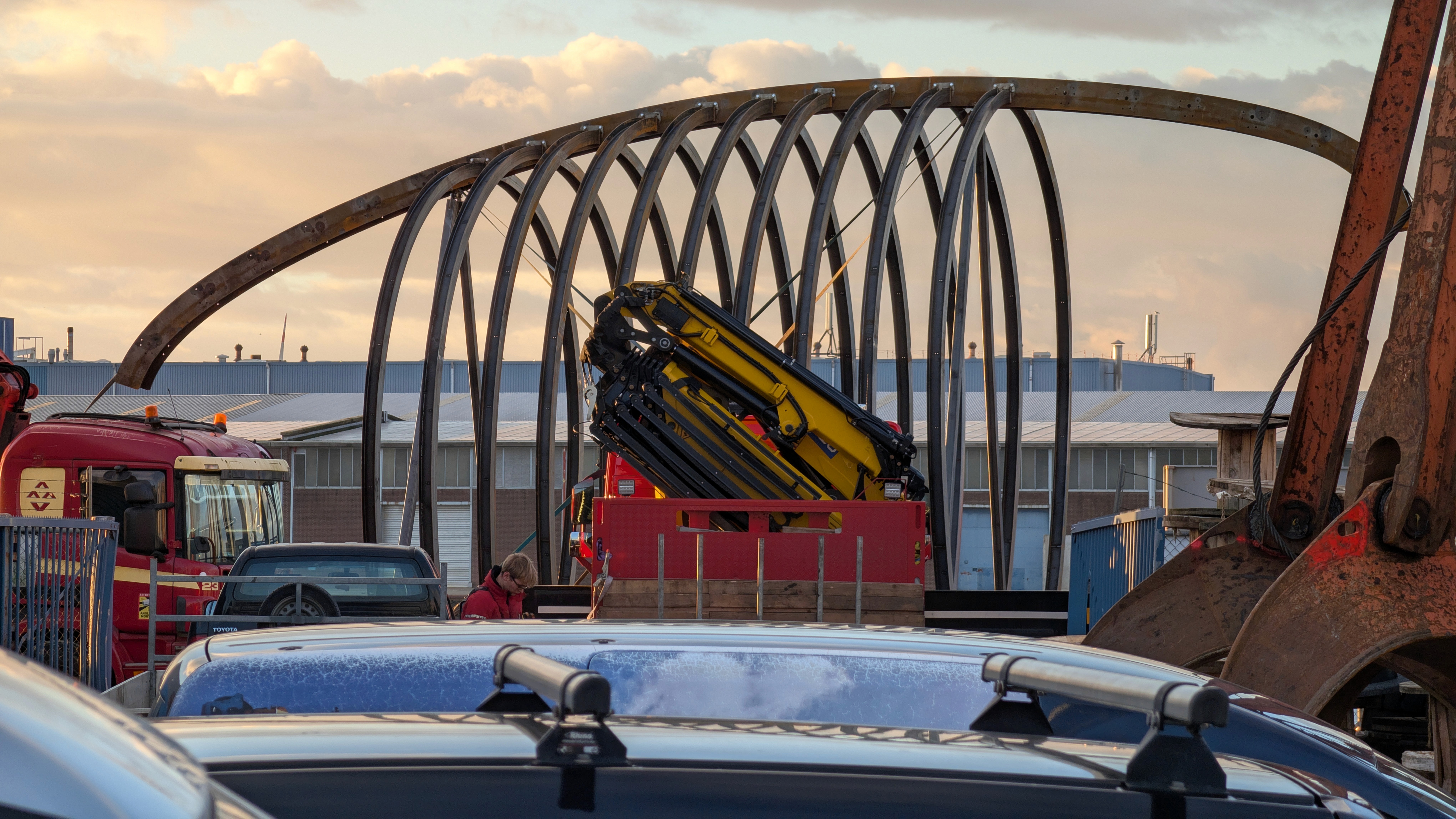

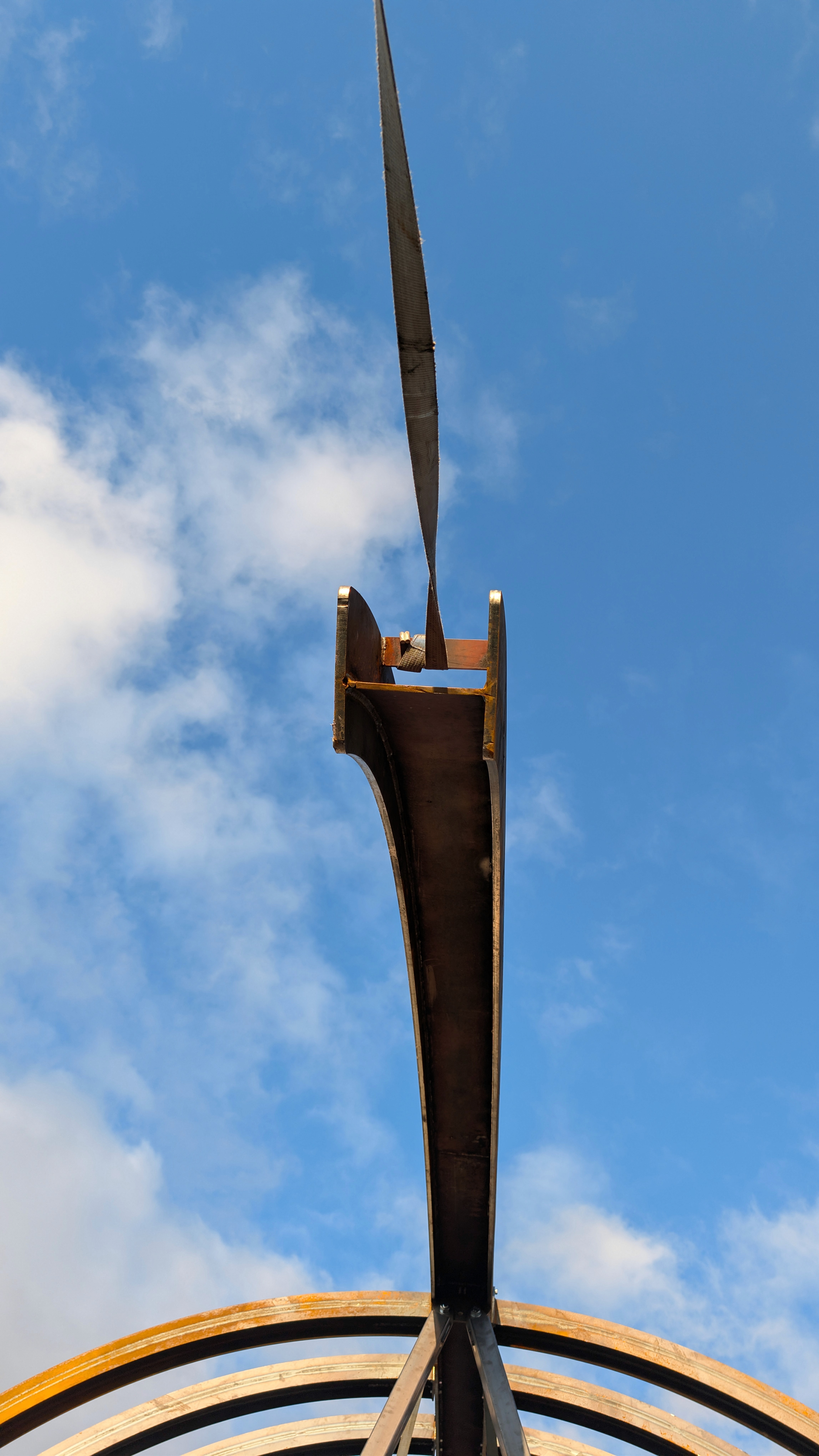
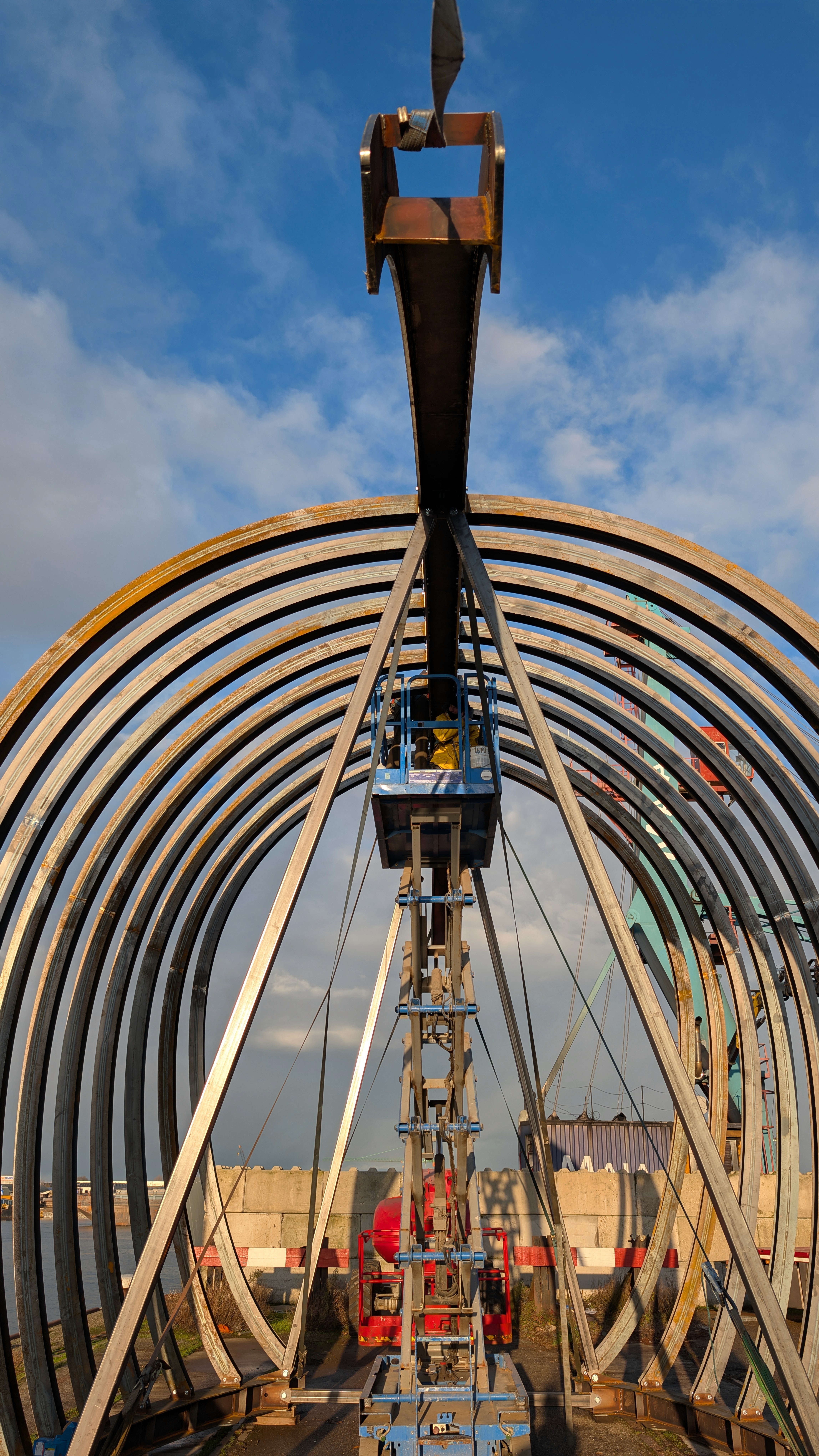
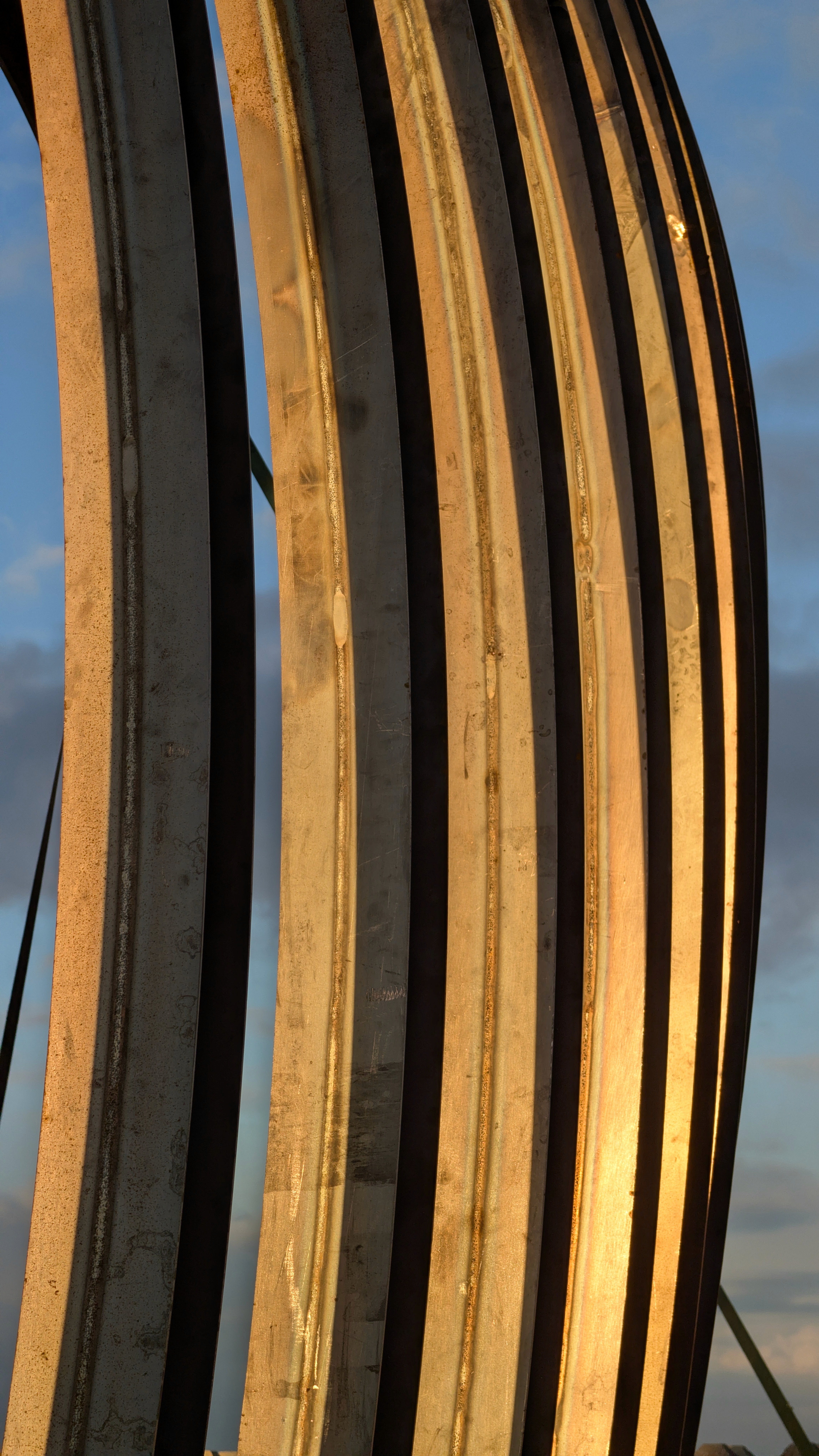
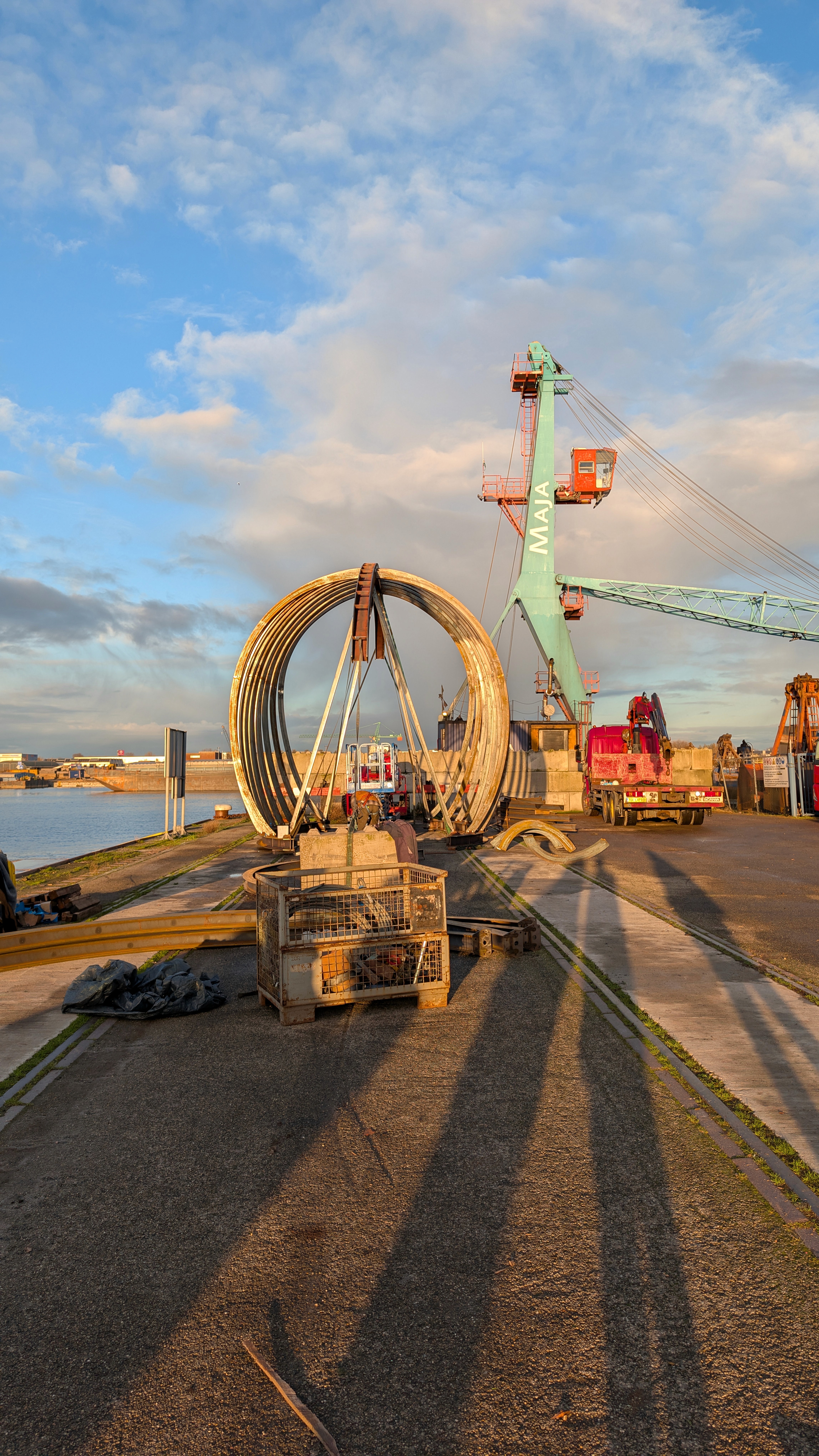
Winner International 2-stage open call competition Amsterdam, The Netherlands designed in Mar 2024, completed in Nov 2025
We began with a question: what remains when a giant disappears? In deep oceans, a whale’s body sinks and becomes a living reef—life blooming from loss. We carried this quiet lesson to the city, asking how a public artwork might hold memory, invite care, and turn absence into a place to gather.
Working across time zones and disciplines, we listened to the site and its stories—water, trade, migration, tide. In Amsterdam, the installation settles beside Het Scheepvaartmuseum, where the city meets the sea. We mapped wind, pedestrian flows, and reflections on the water. Partners across continents helped refine structure, light, and assembly, so that what arrived was not a spectacle, but a conversation—open, steady, and shared.
The form—rib, spine, and void—frames a room of air. By day, the structure reads as a delicate skeleton, a drawing in space that children can run through and adults can pause within. By night, gentle light traces each line, turning the void into a lantern. The work asks for slower steps: to look up, to listen, to feel the scale of what is missing and the life that might return.
“Whale Fall” is not about a single animal; it is about legacy. It holds space for the city to remember the waters that made it, and to imagine futures made with more care. In this threshold between land and sea, the piece becomes a small commons—an invitation to stand together, to tell stories, and to leave the place a little softer than we found it. Legacy is decided by those who come after.
architecture
black lava field visitor center

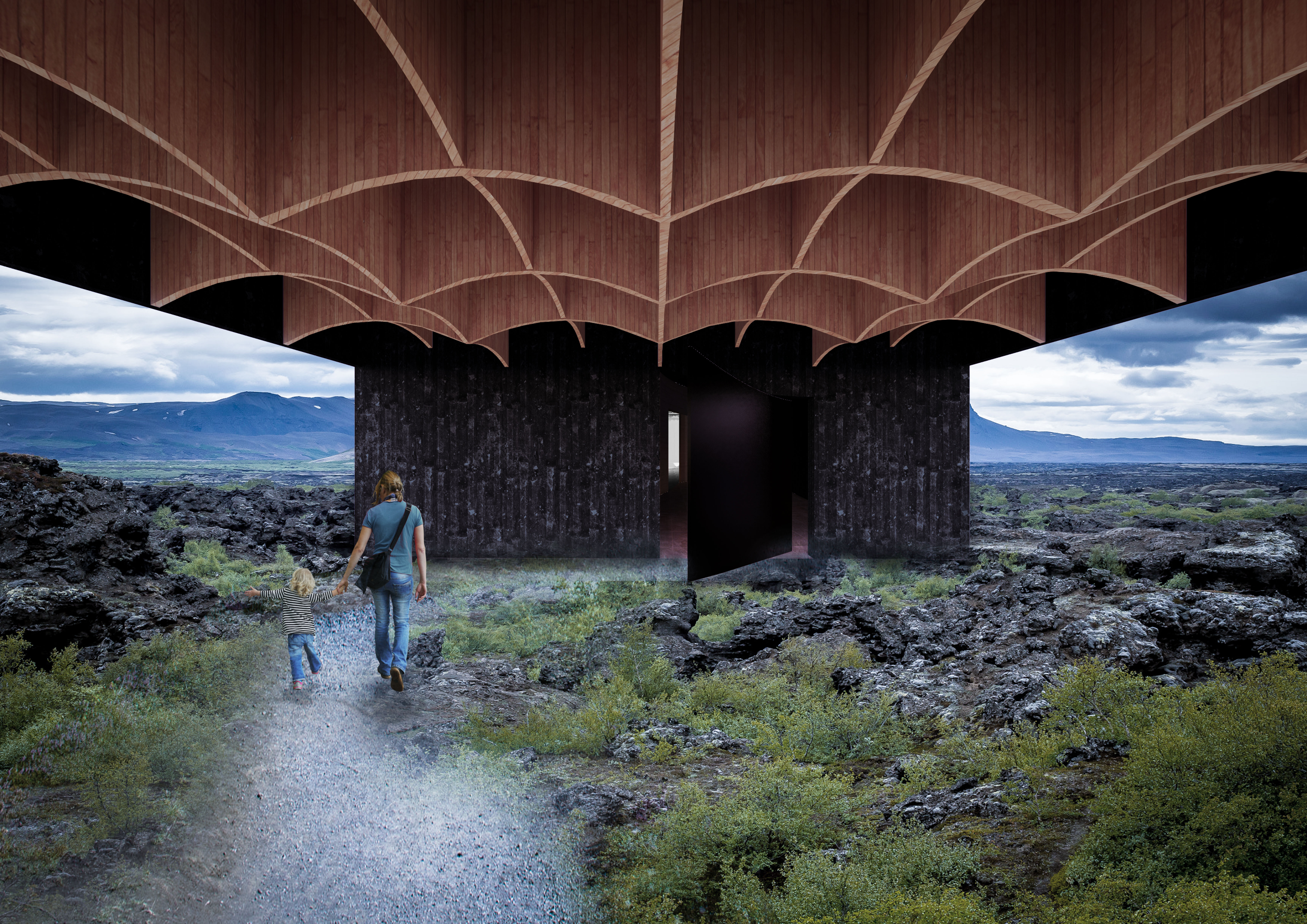
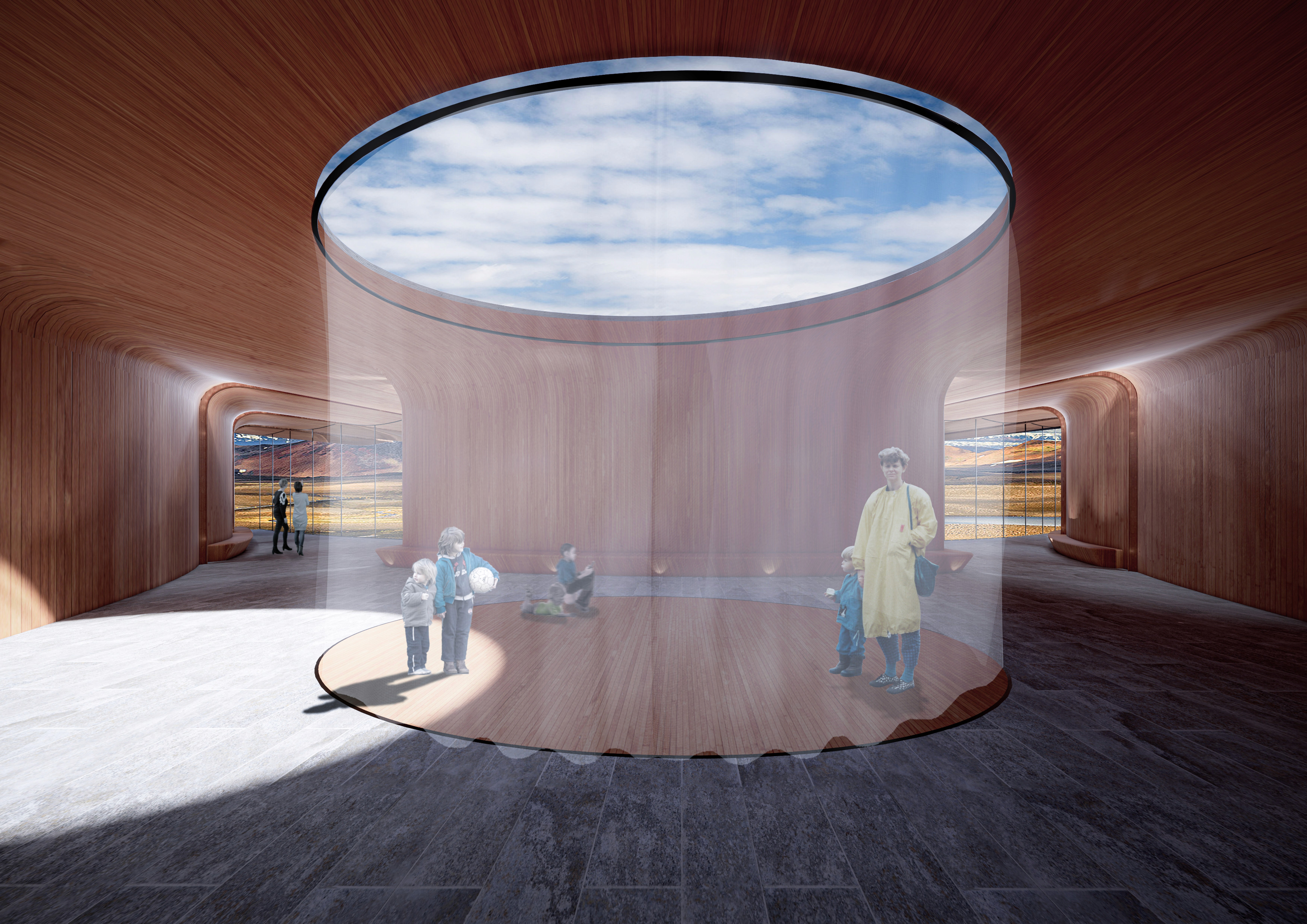
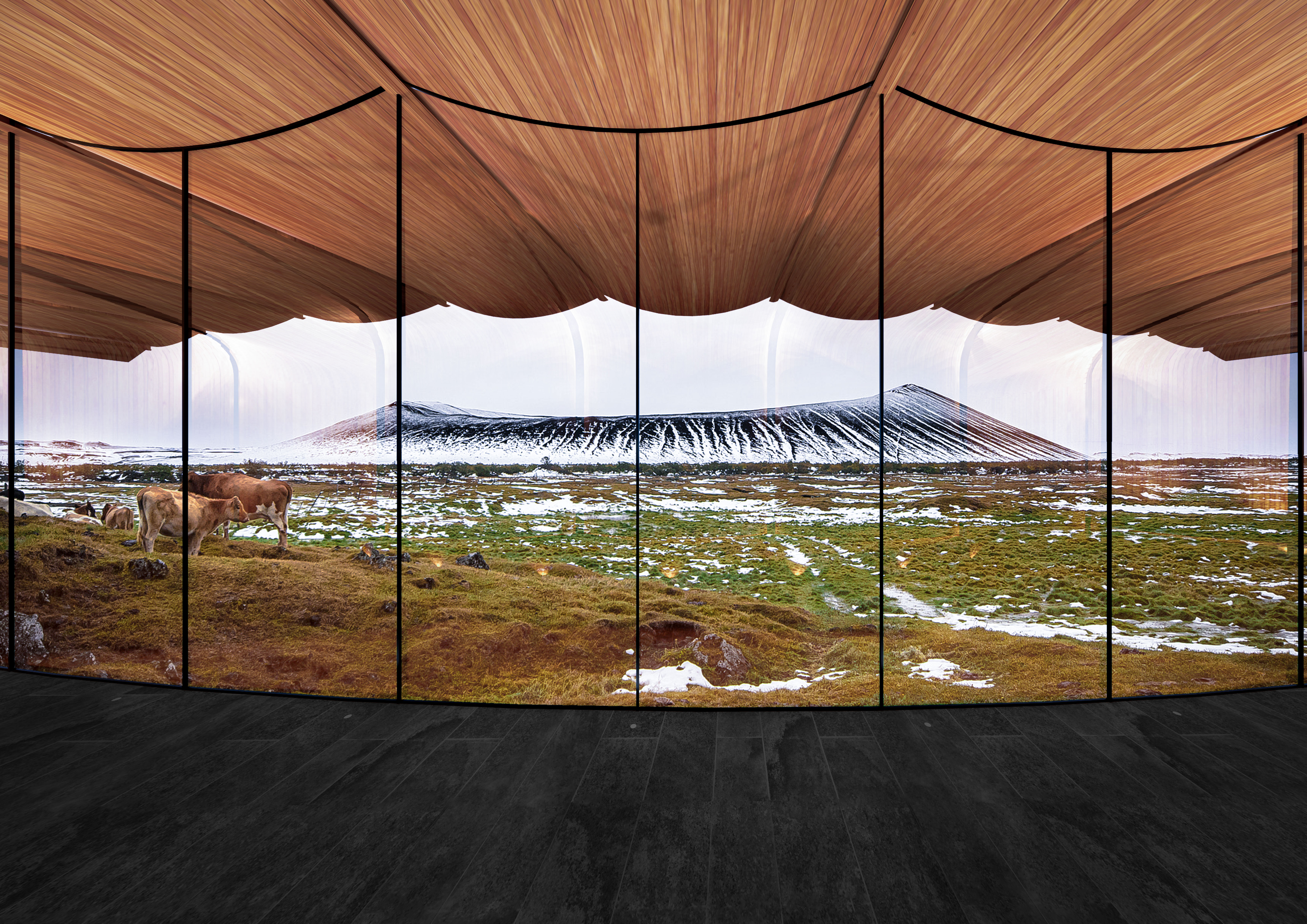
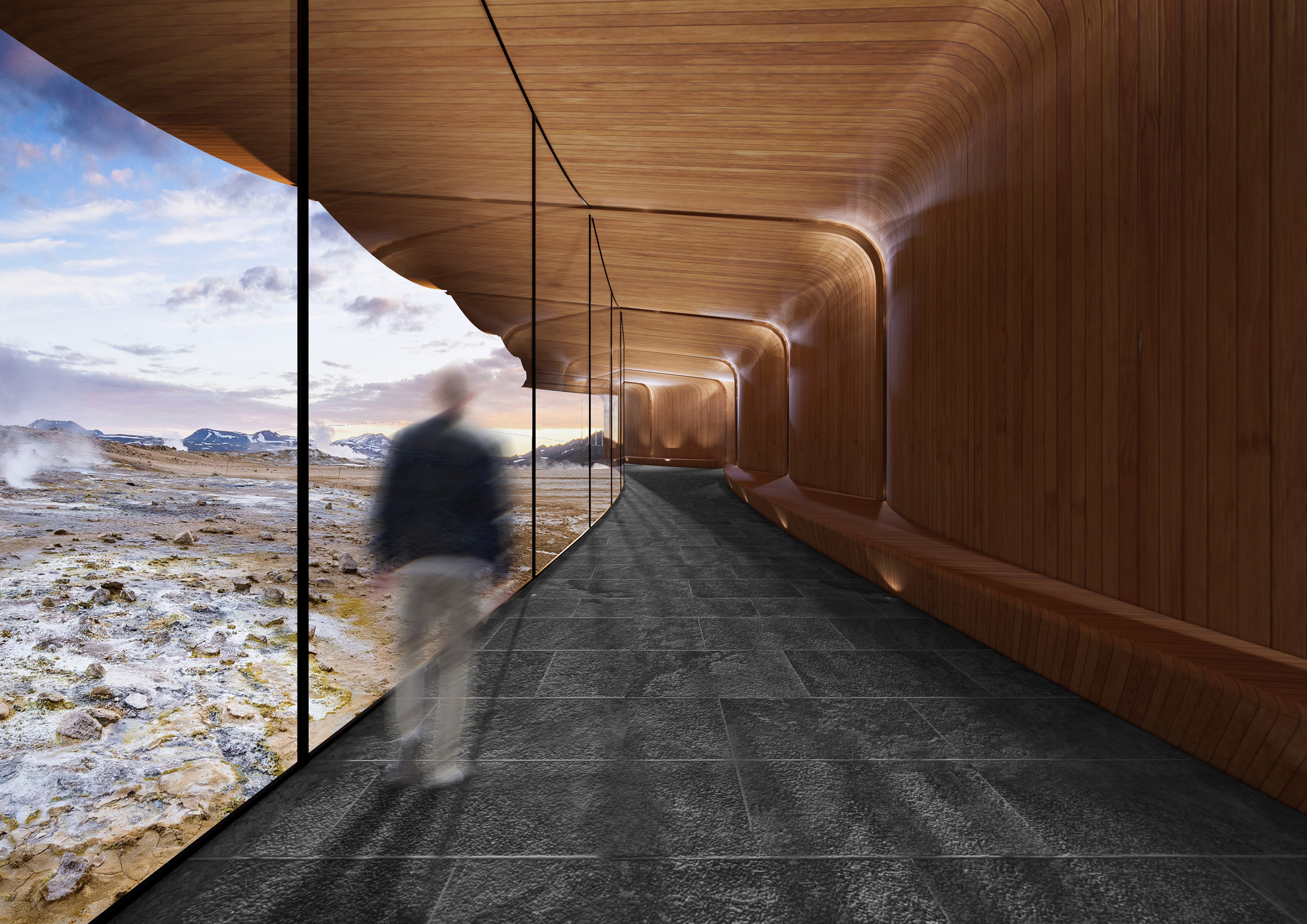
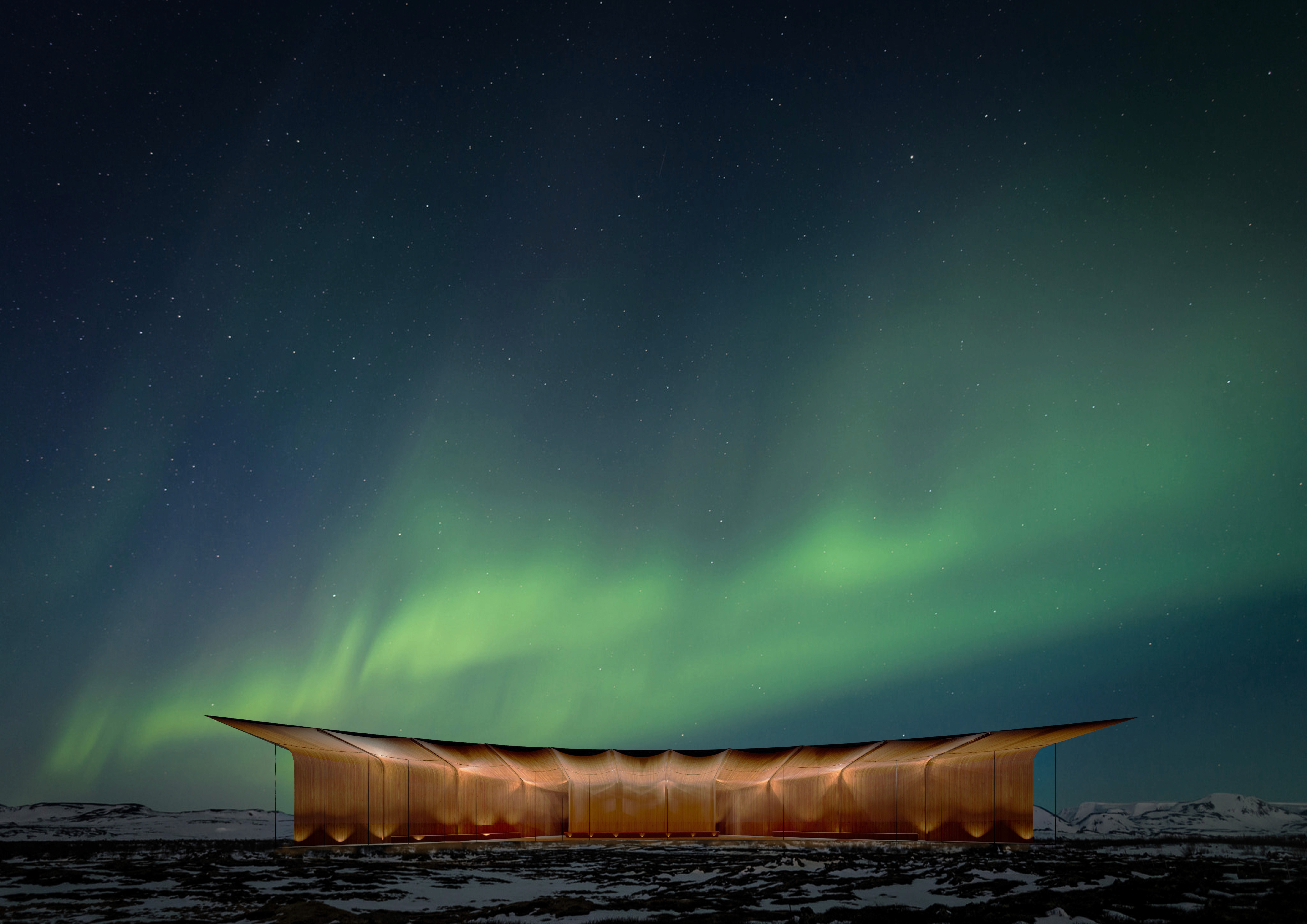
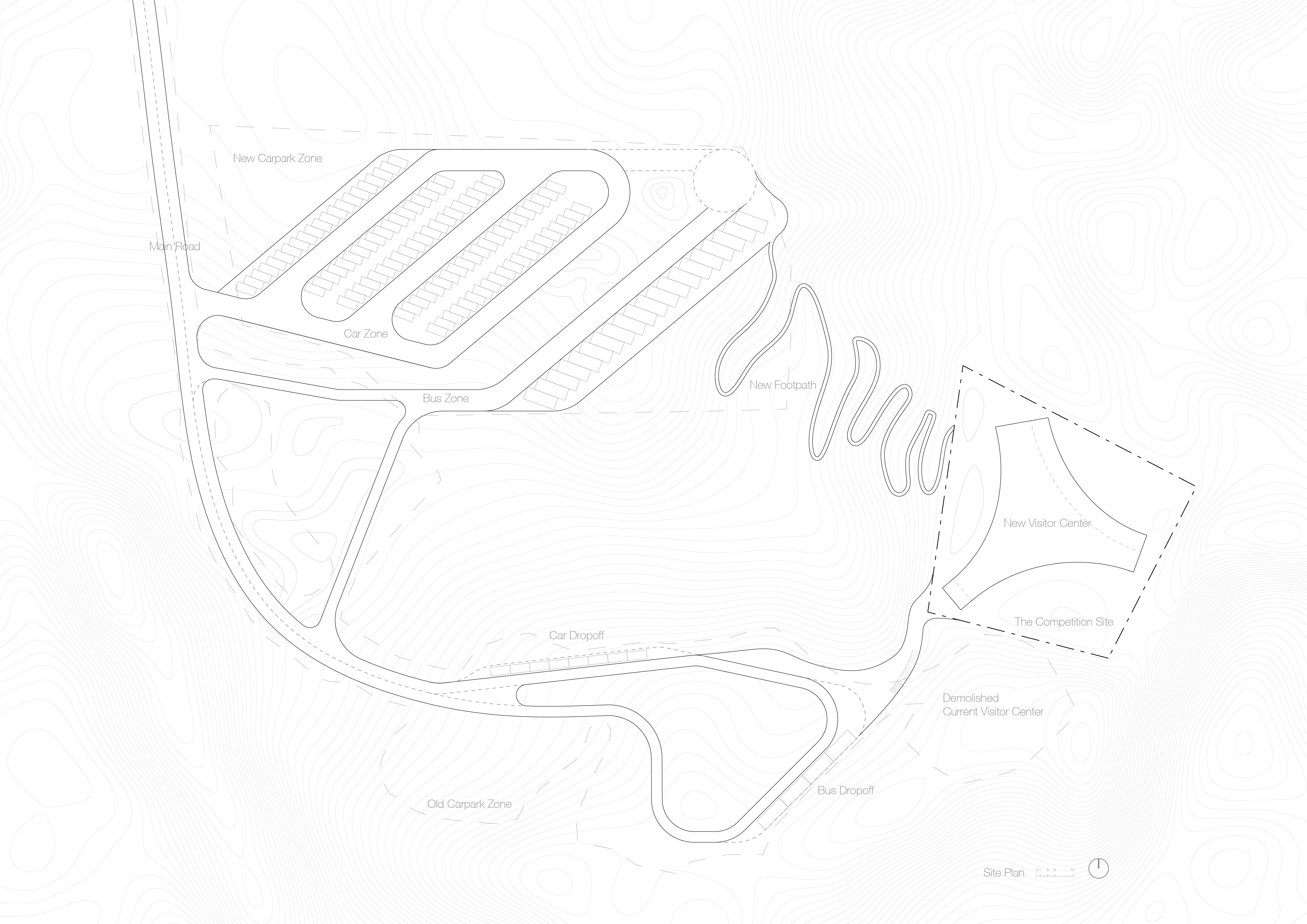
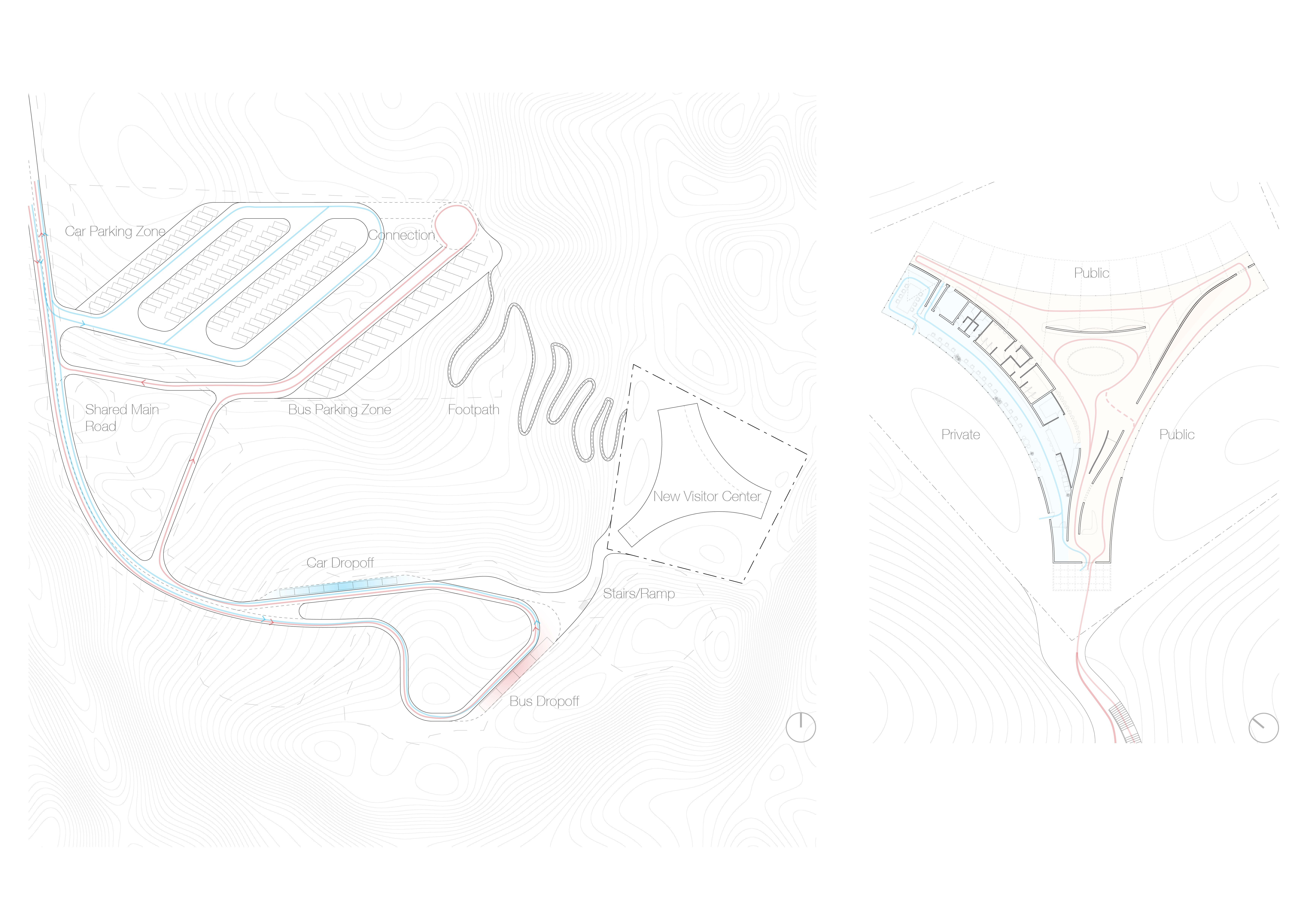
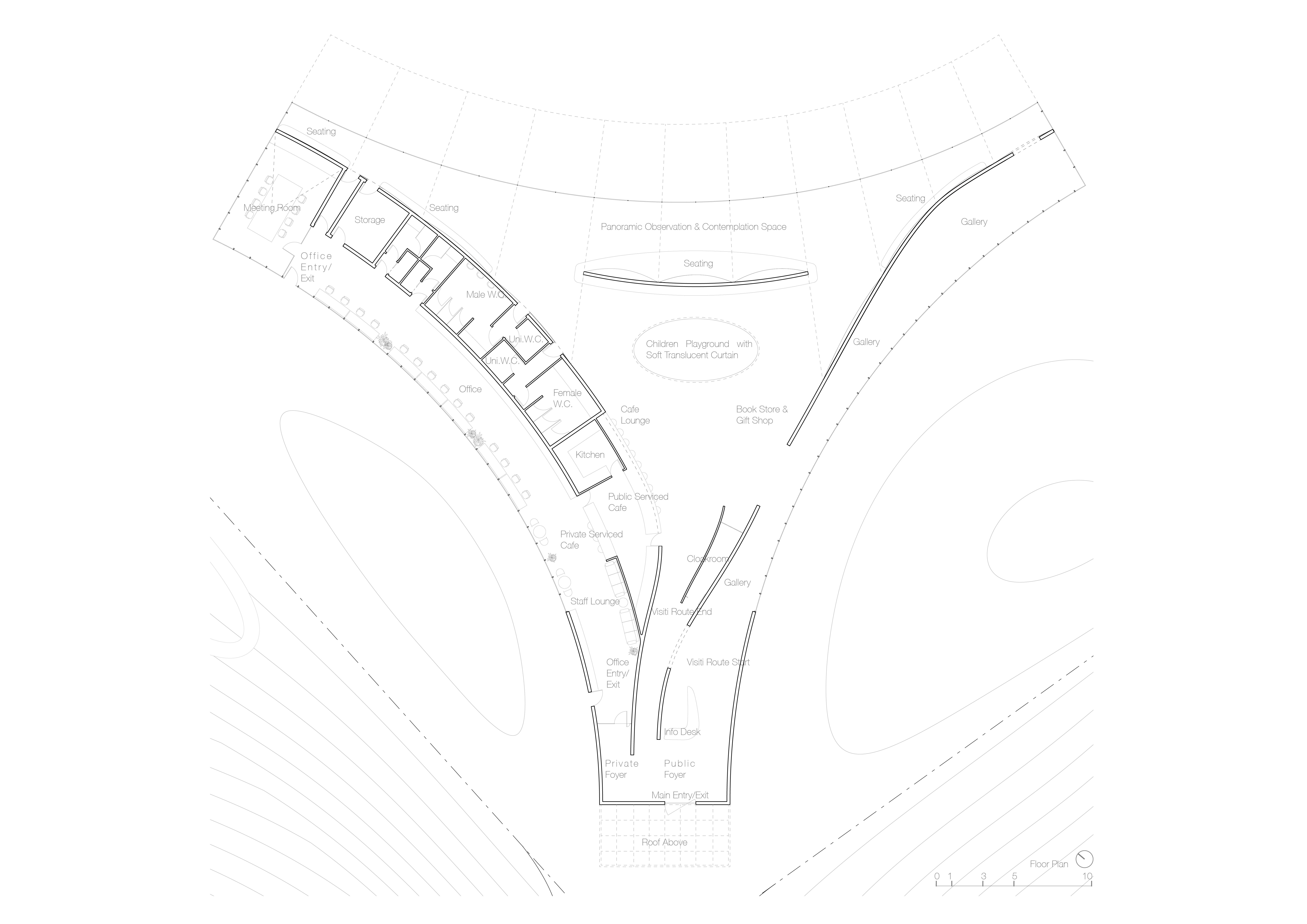

Honourable mention award International competition Dimmuborgir, Iceland designed in 2019
At first, we stand before a land shaped by ancient lava and time — dark, twisted towers rising without clear borders, caught between the calm waters of Mývatn and the quiet might of Hverfjall. Here, the challenge is to guide visitors into a place that offers no easy welcome. There are no strong signals, no clear thresholds, only the hushed grandeur of nature’s own design. We asked: How can we honor this landscape, help others see what lies before them, and let them feel the weight of its story?
We listened to the subtle cues of wind and stone, to the folk tales murmured through old paths, and to the quiet requests of travelers who need a place to pause, learn, and breathe. Step by step, the design emerged — sunk low into the earth, out of sight at first, so that one discovers it gently, as though uncovering a secret in the land. The building protects against fierce winds, yet opens to a sweeping view: from the shelter within, visitors can watch volcano and rock formations unfold before their eyes.
Inside, each turn is shaped by care. A curved wall separates the working heart of the center from the public spaces of gathering, sharing, and wonder. Simple materials — basalt stone, warm timber, subtle glass — mirror the surroundings, ensuring the building feels woven into the place rather than set apart. Light and texture guide the way. A gallery shelters quiet stories of the past. A café and children’s corner invite lingering, laughter, and learning. At the far edge, broad windows frame a panorama where nature’s drama plays out in real time.
Finally, visitors step through, drawn toward the “Dark Castles” themselves. As they move into Dimmuborgir, the center’s role slips into the background. It has done its part — offered understanding, comfort, and a gentle gateway. The landscape can now speak for itself, and each traveler departs carrying a richer sense of what these ancient formations mean, not just in form, but in spirit.
Public Art
poldra Public Art

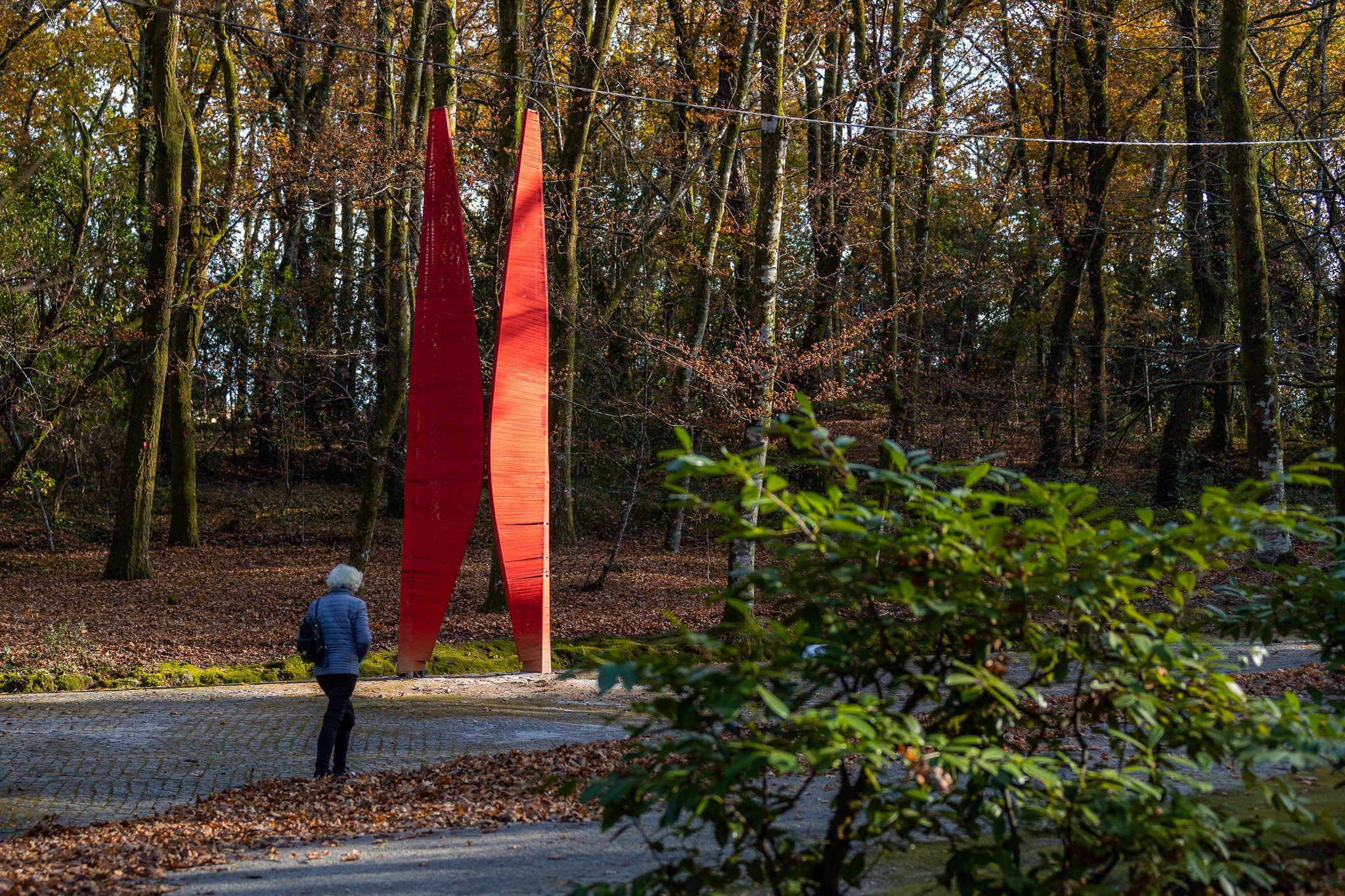
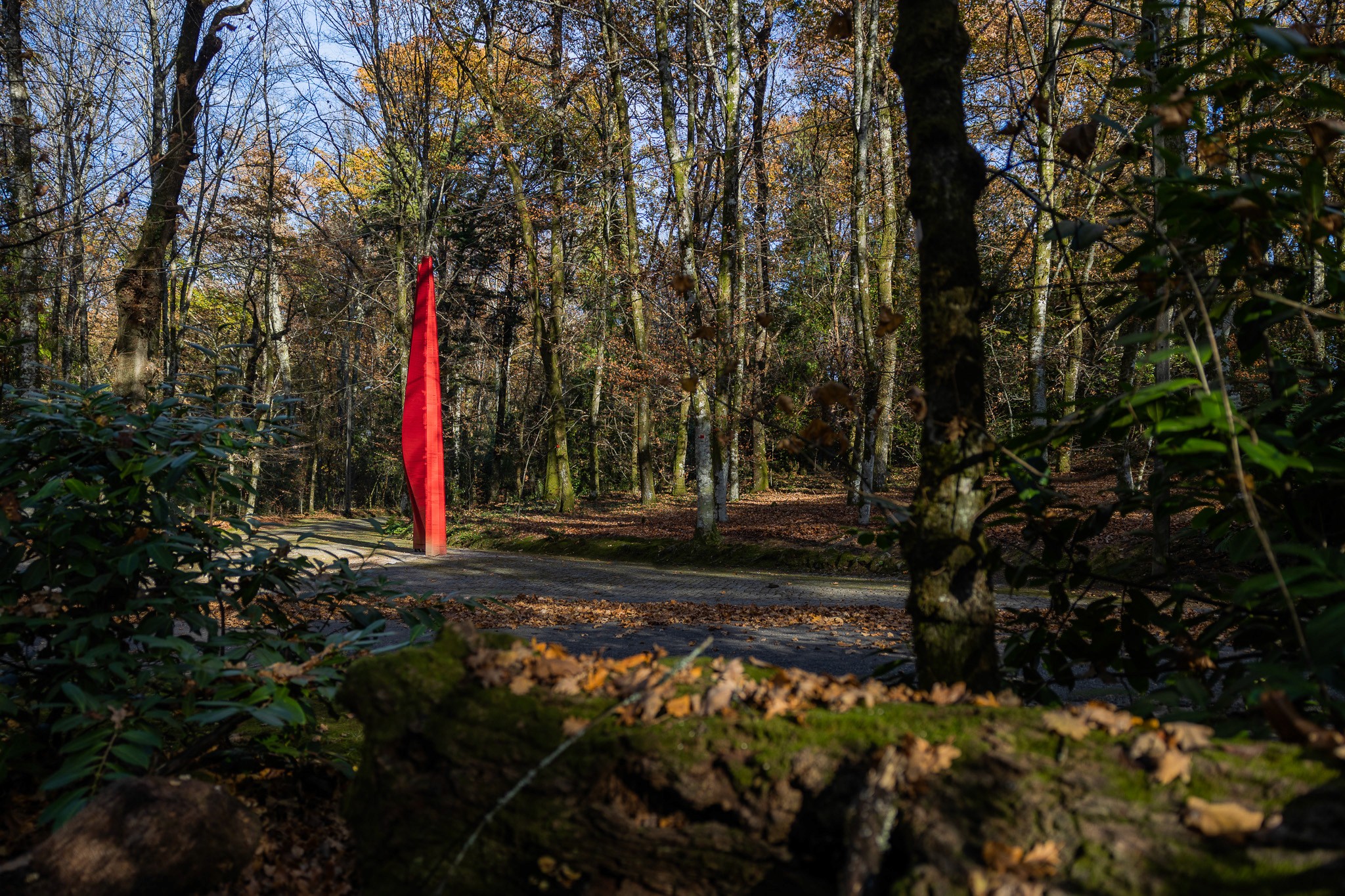
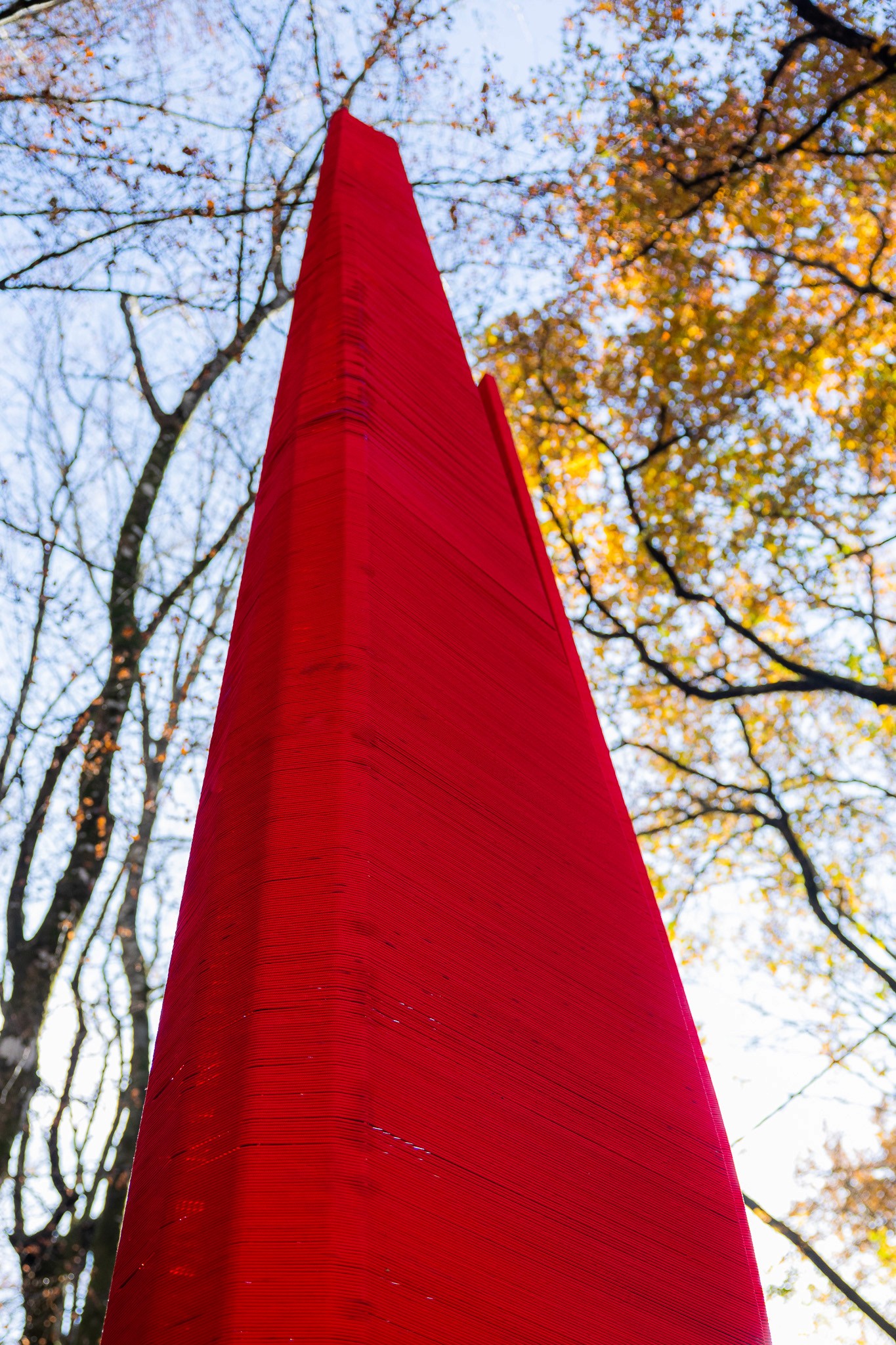

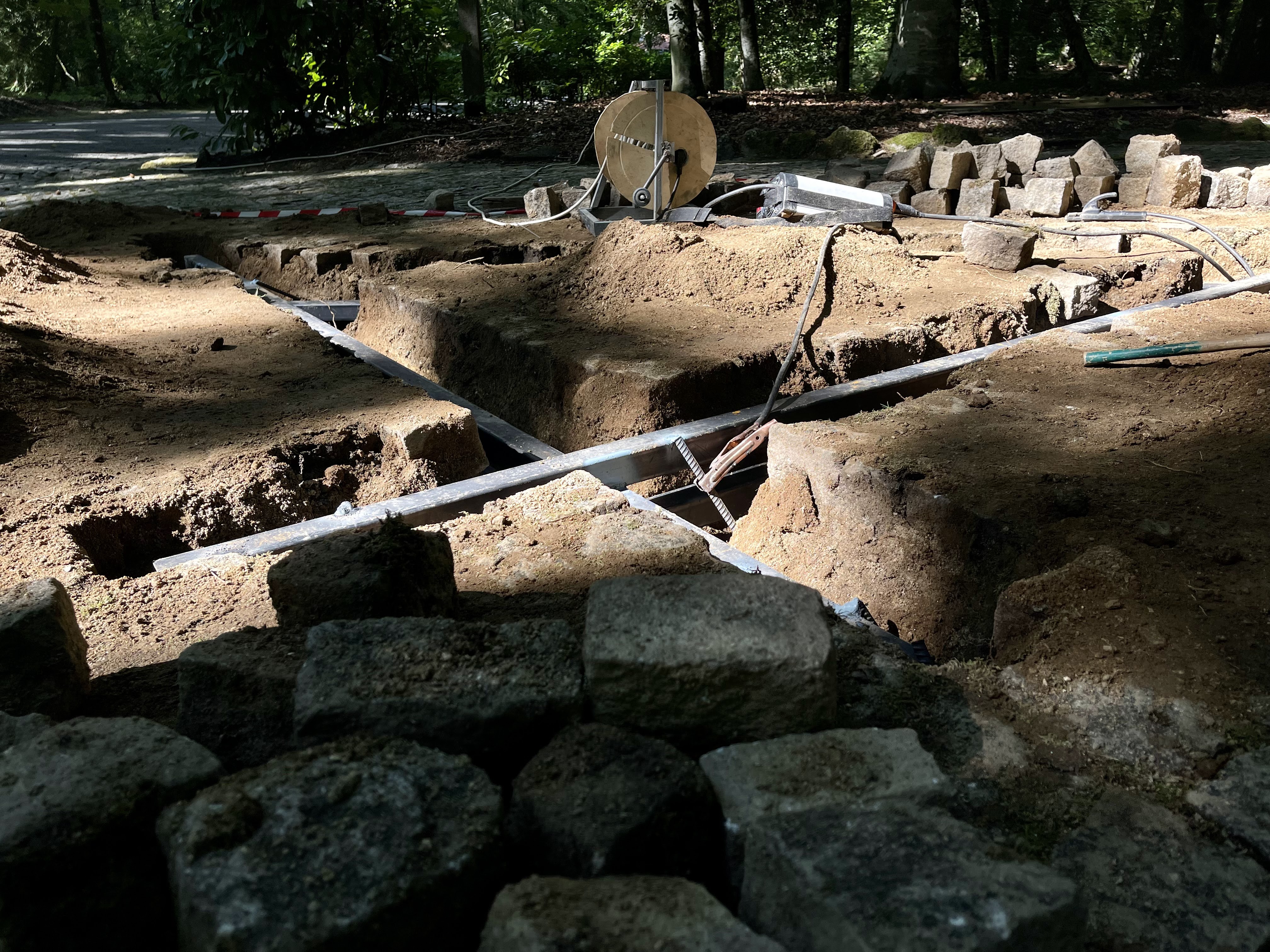
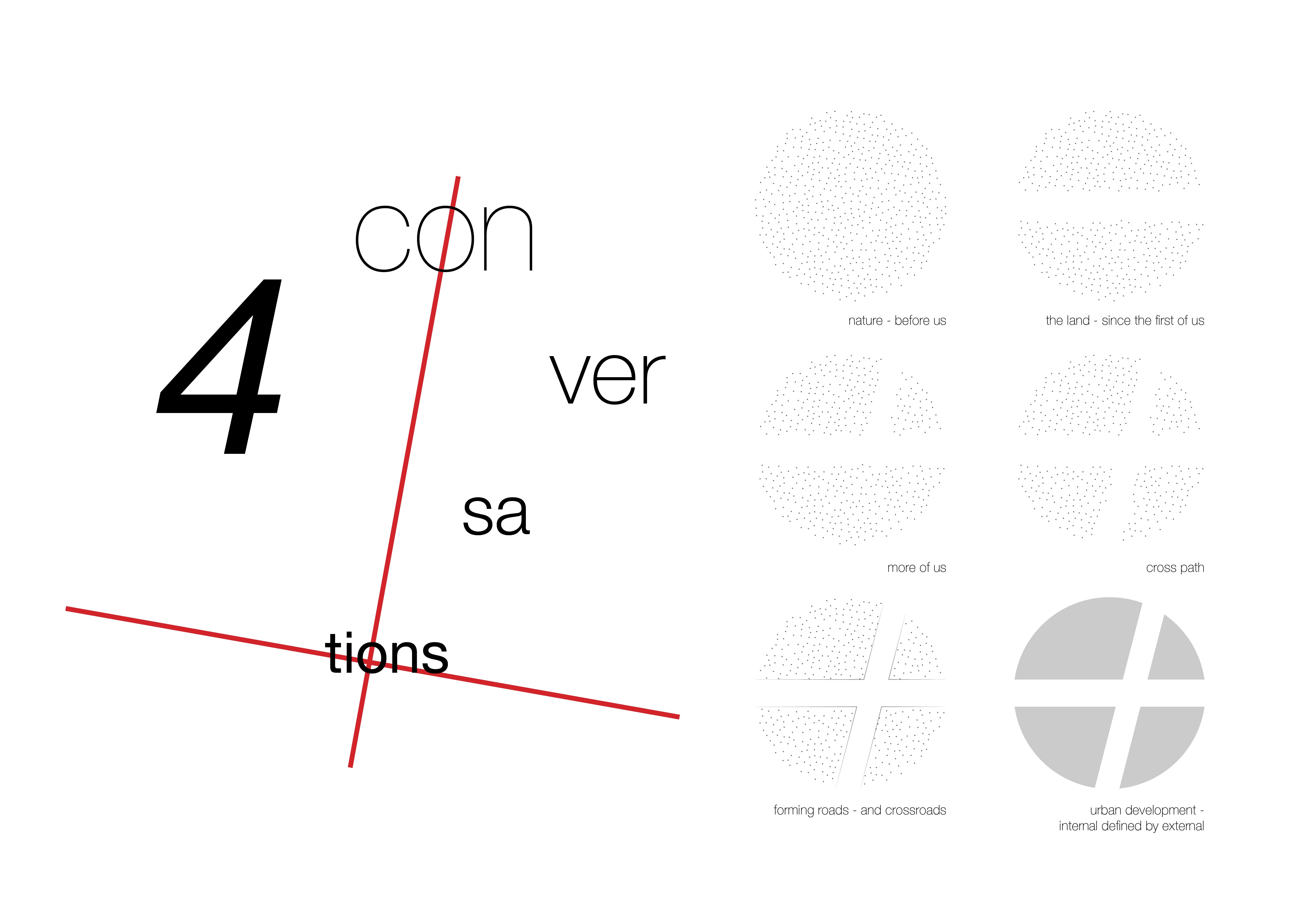

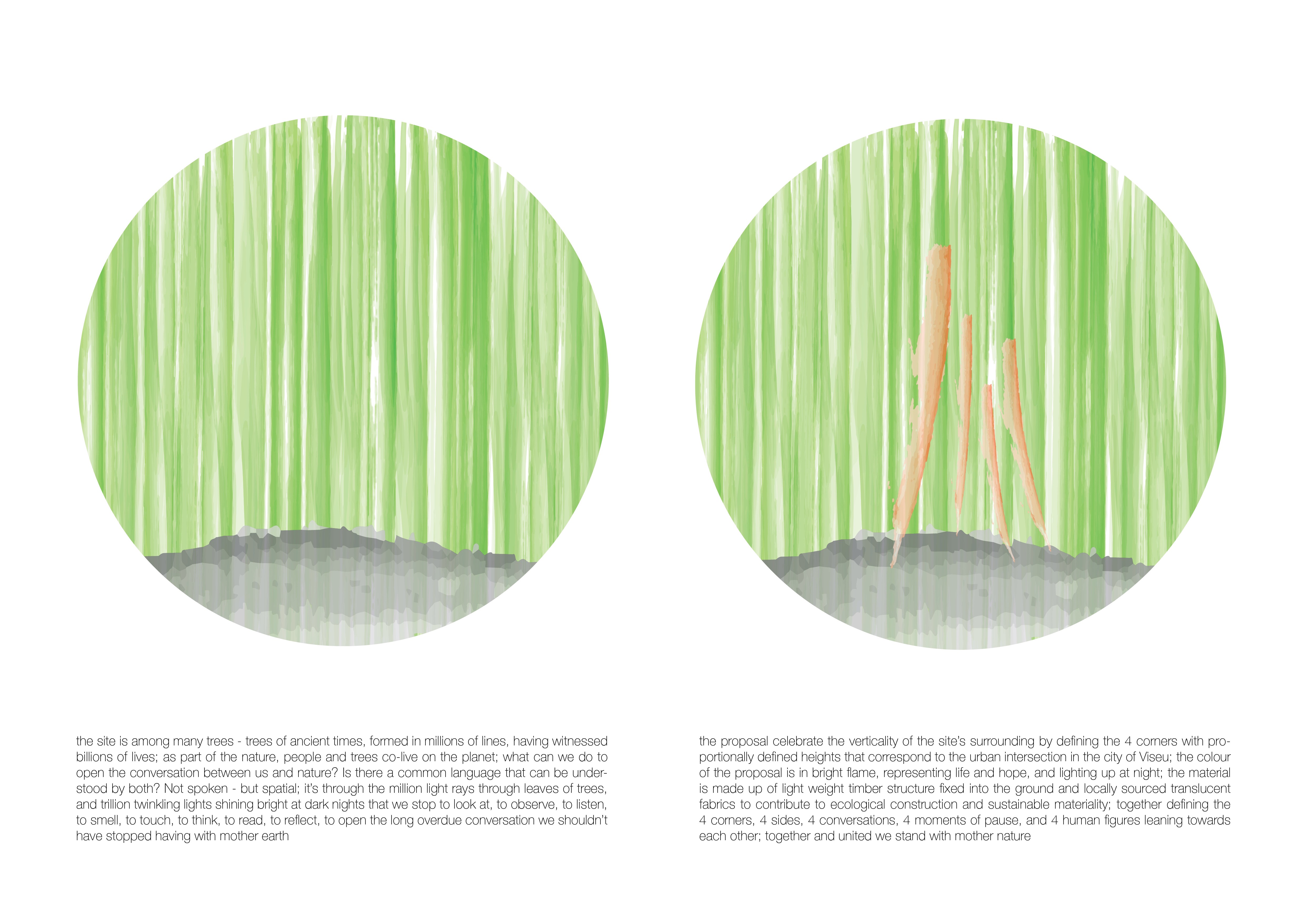

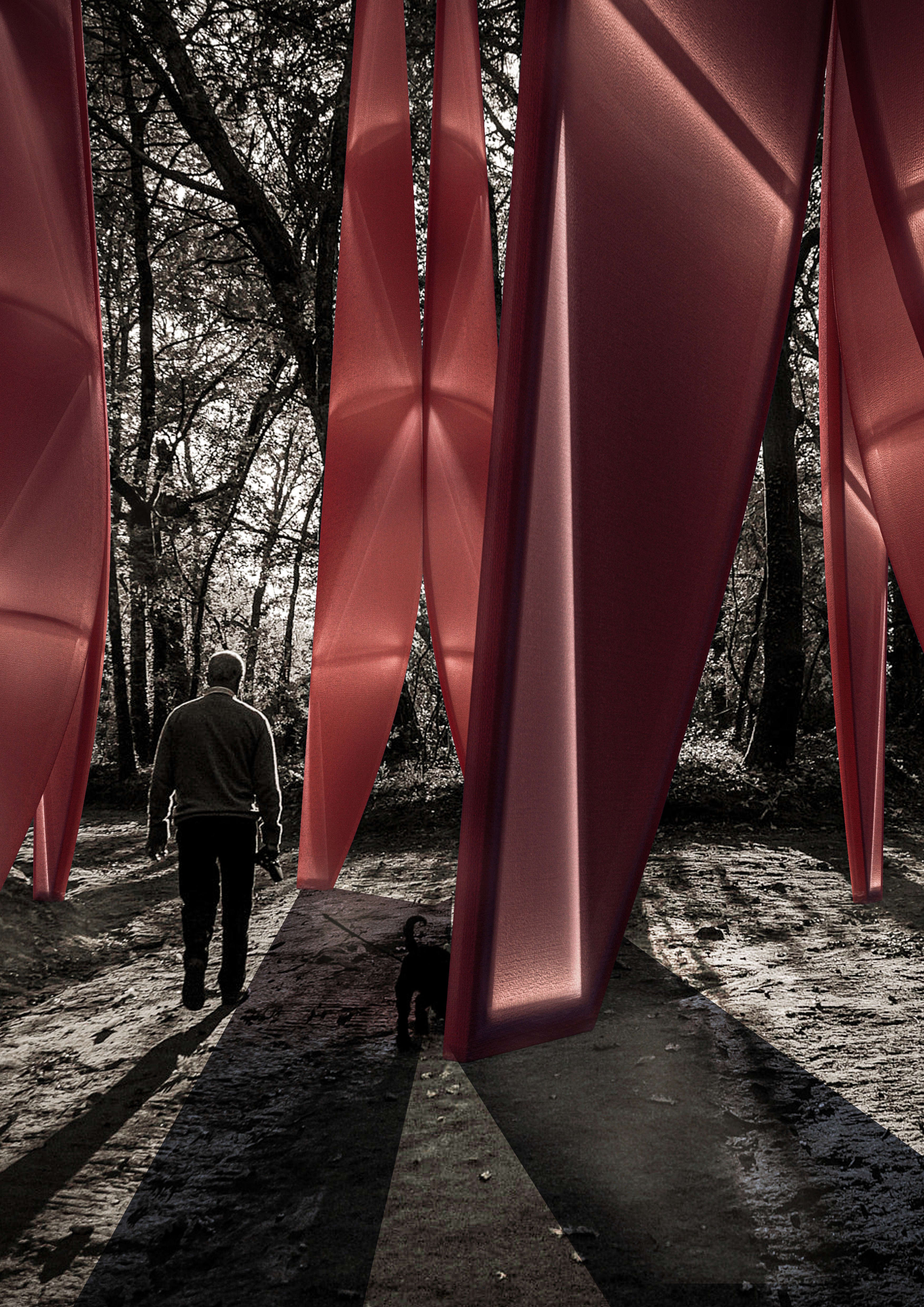
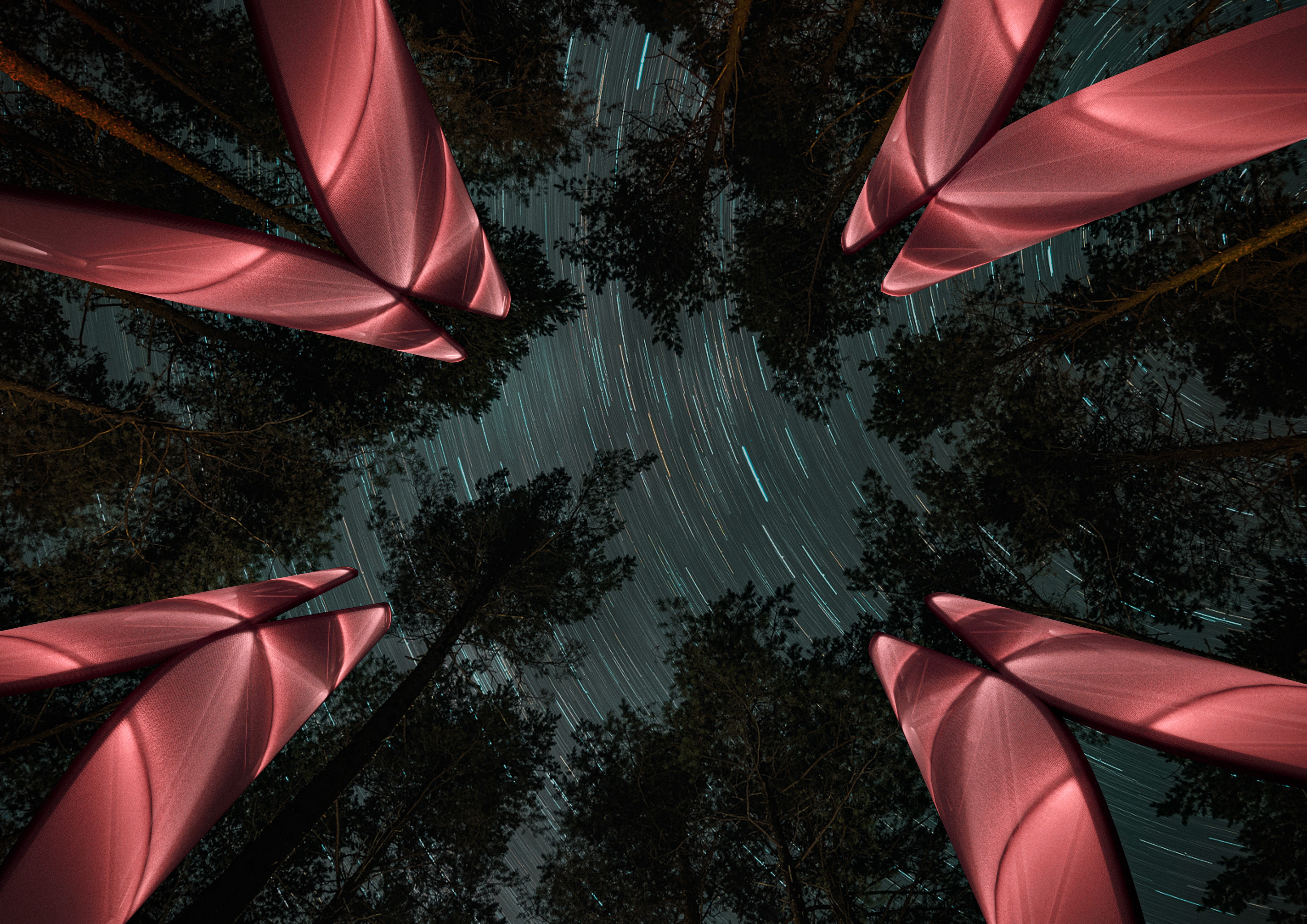
winner award international competition Viseu, Portugal completed 2021
Here, in the quiet heart of Mata do Fontelo, a small crossroads appears between unpaved paths and ancient trees. A place where nature’s whispers mingle with echoes of distant human footsteps. The question we faced: How to invite people to pause, to stand at this gentle intersection, and recognize the bond we share with the living world around us?
We began by listening. We looked closely at the woodland floor and the patterns of light that shift through leaves. We thought about the city beyond, where streets and buildings form their own intersections. Each place, large or small, is a space of meeting—people with people, people with nature, and nature with time. We wanted this installation to reflect that ongoing conversation, a reminder that every path is woven into something larger.
Our proposal rises in four simple forms — four corners that mark out a space of dialogue. Their bright, flame-colored surfaces catch and reflect the changing daylight, and glow softly at night like embers guiding travelers in the forest. Within these four points lies a moment of pause, encouraging visitors to look up and listen, to sense how trees and air, soil and birdsong, all share a quiet story older than any human tongue.
Crafted from locally sourced timber and translucent fabrics, the installation blends with its surroundings and honors the earth it stands upon. Its shape and scale echo an urban crossroads, but here the intersection is open, fluid, and alive. This is a place to consider how we live with nature and how nature lives within us. It asks us to notice the forgotten questions, to rediscover common ground, and to remember that even at a simple forest crossing, we find the world waiting, ready to speak.
Architecture
old young's distillery
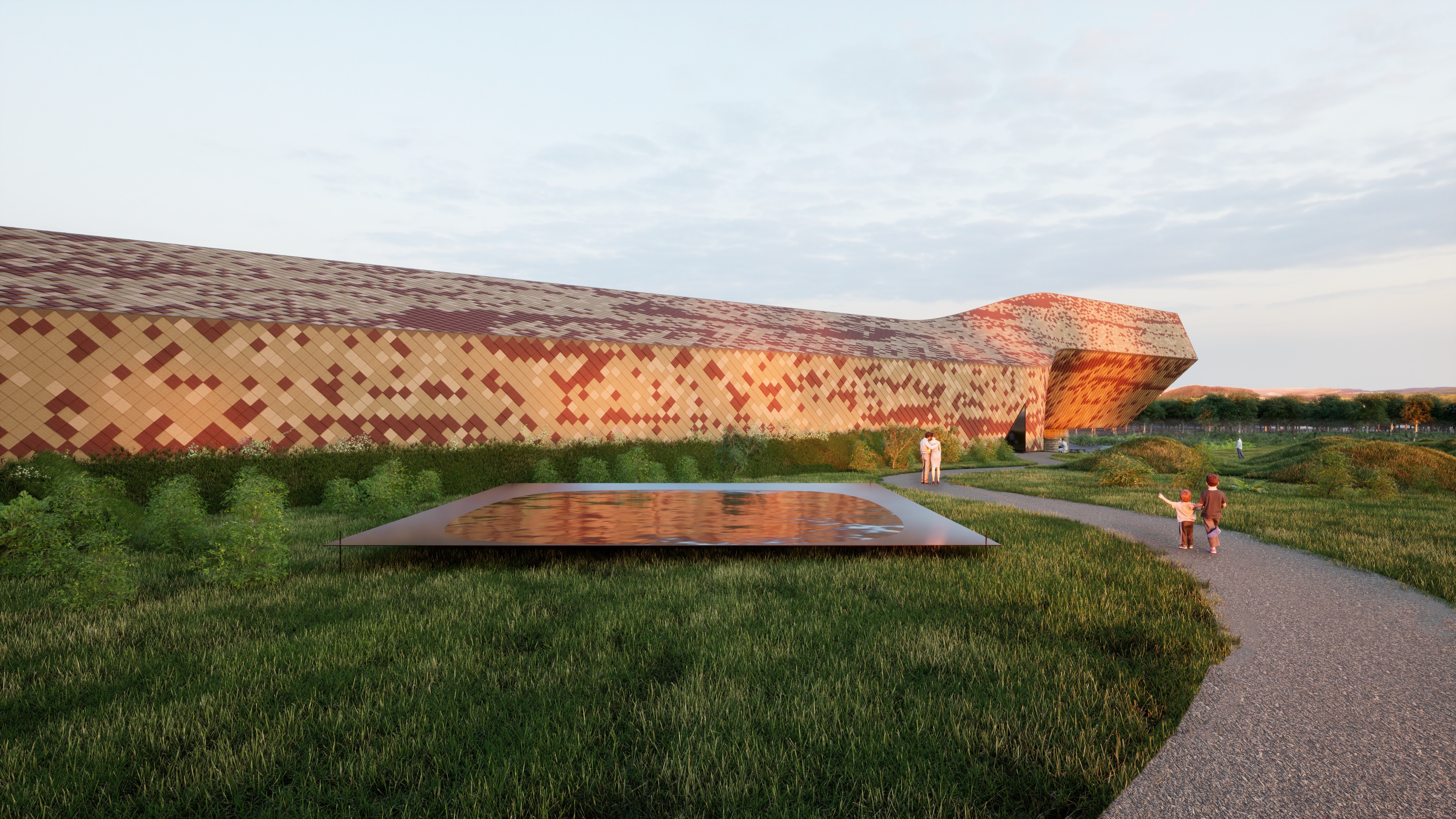


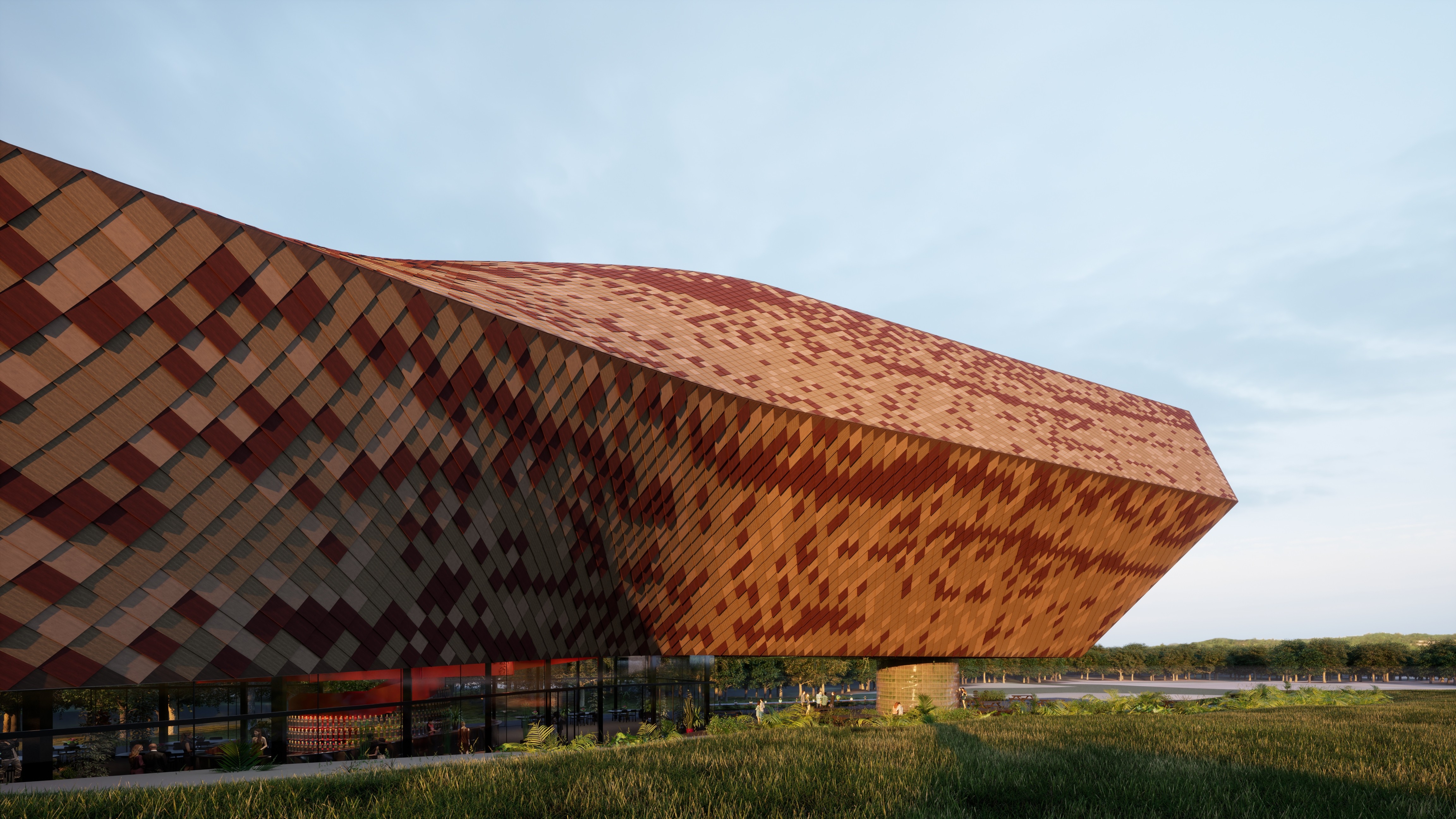
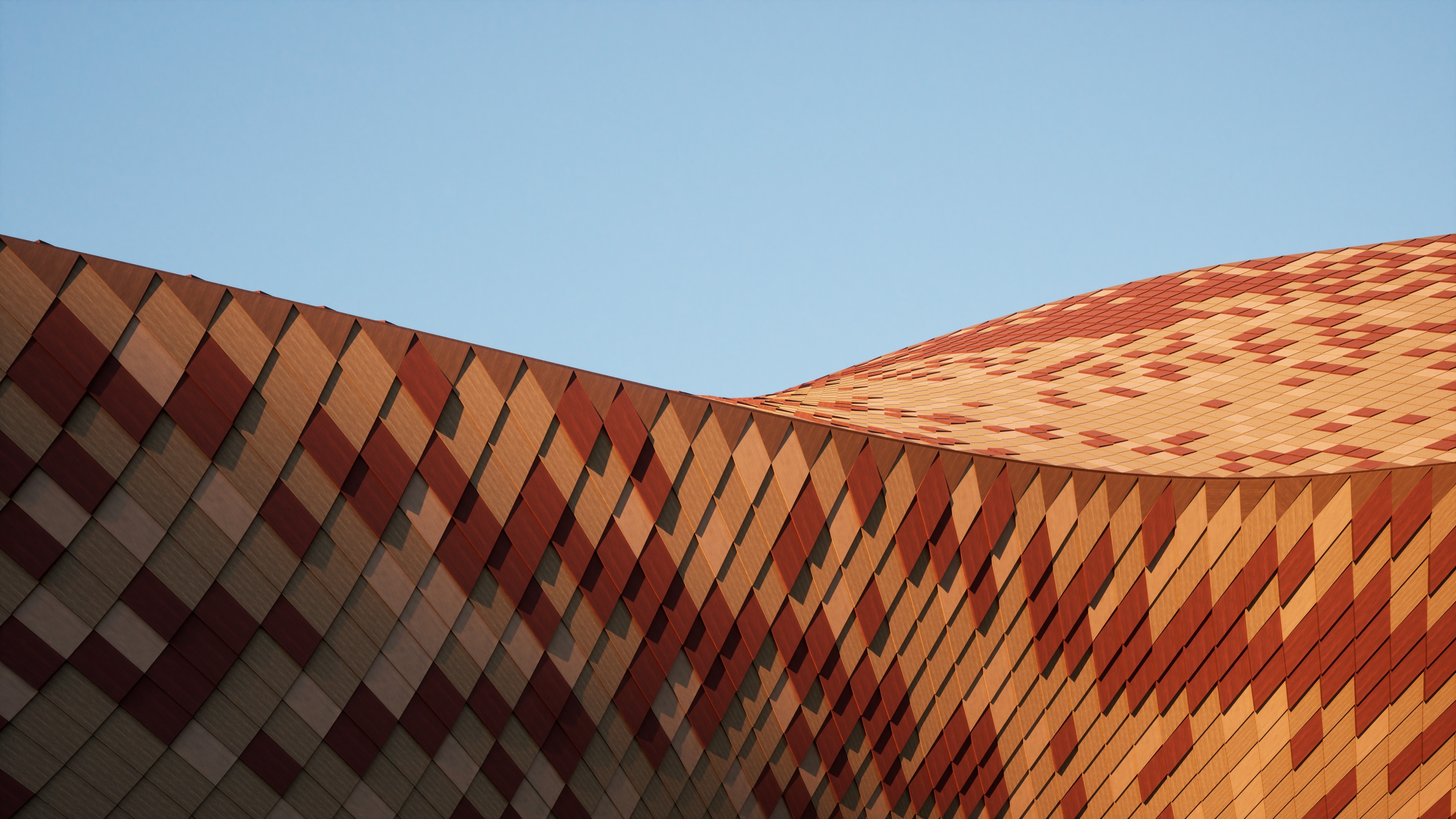
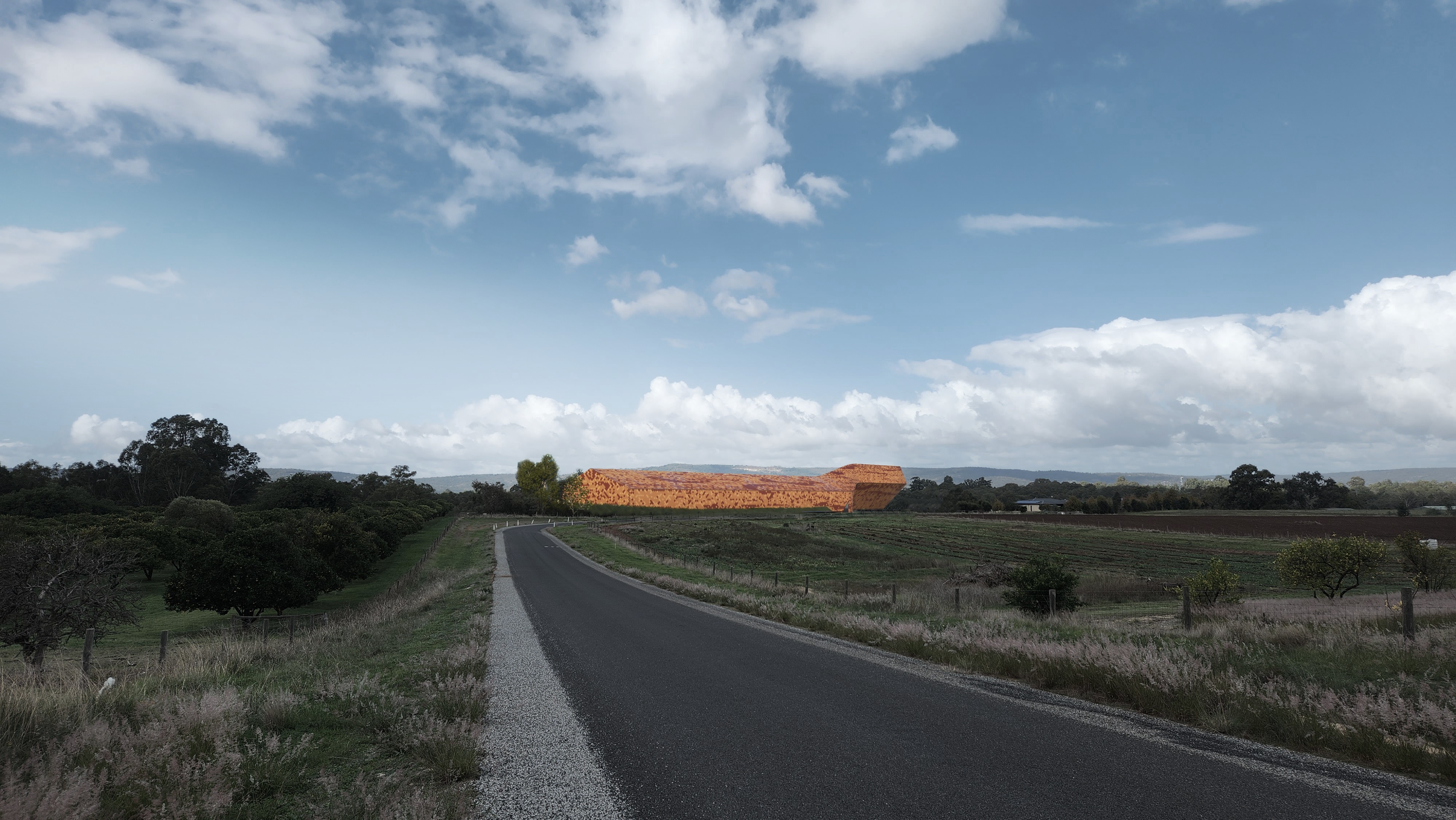
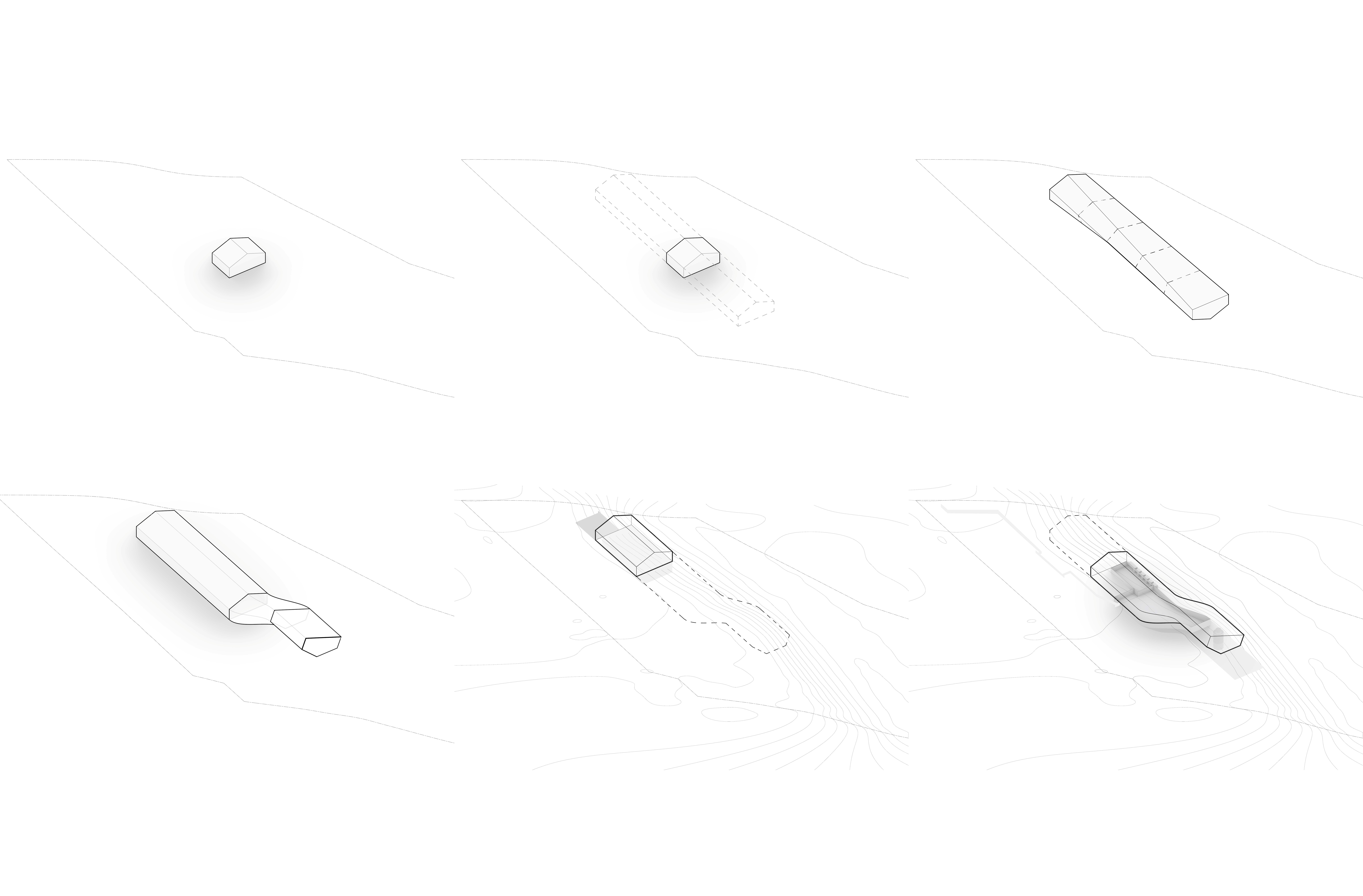

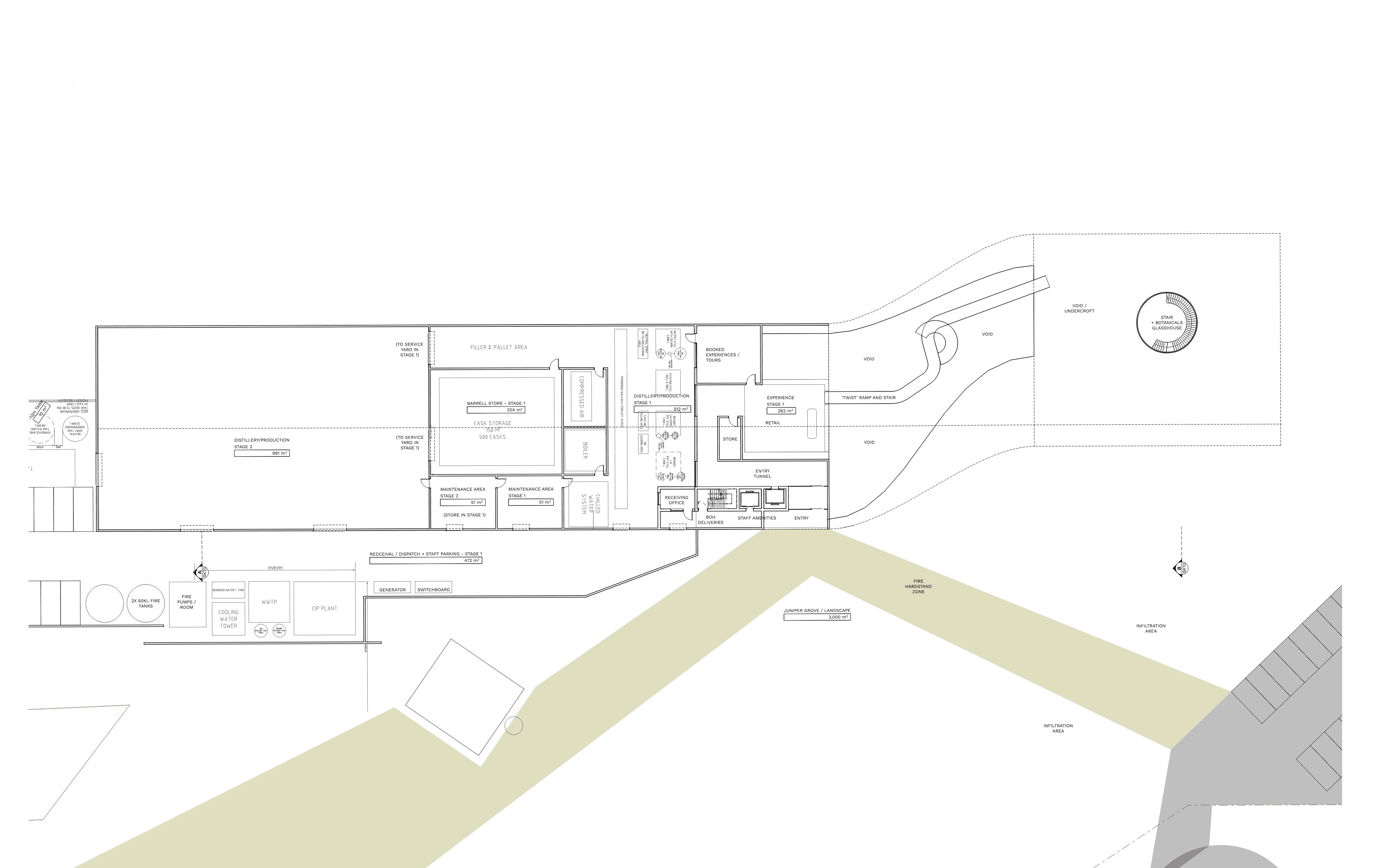
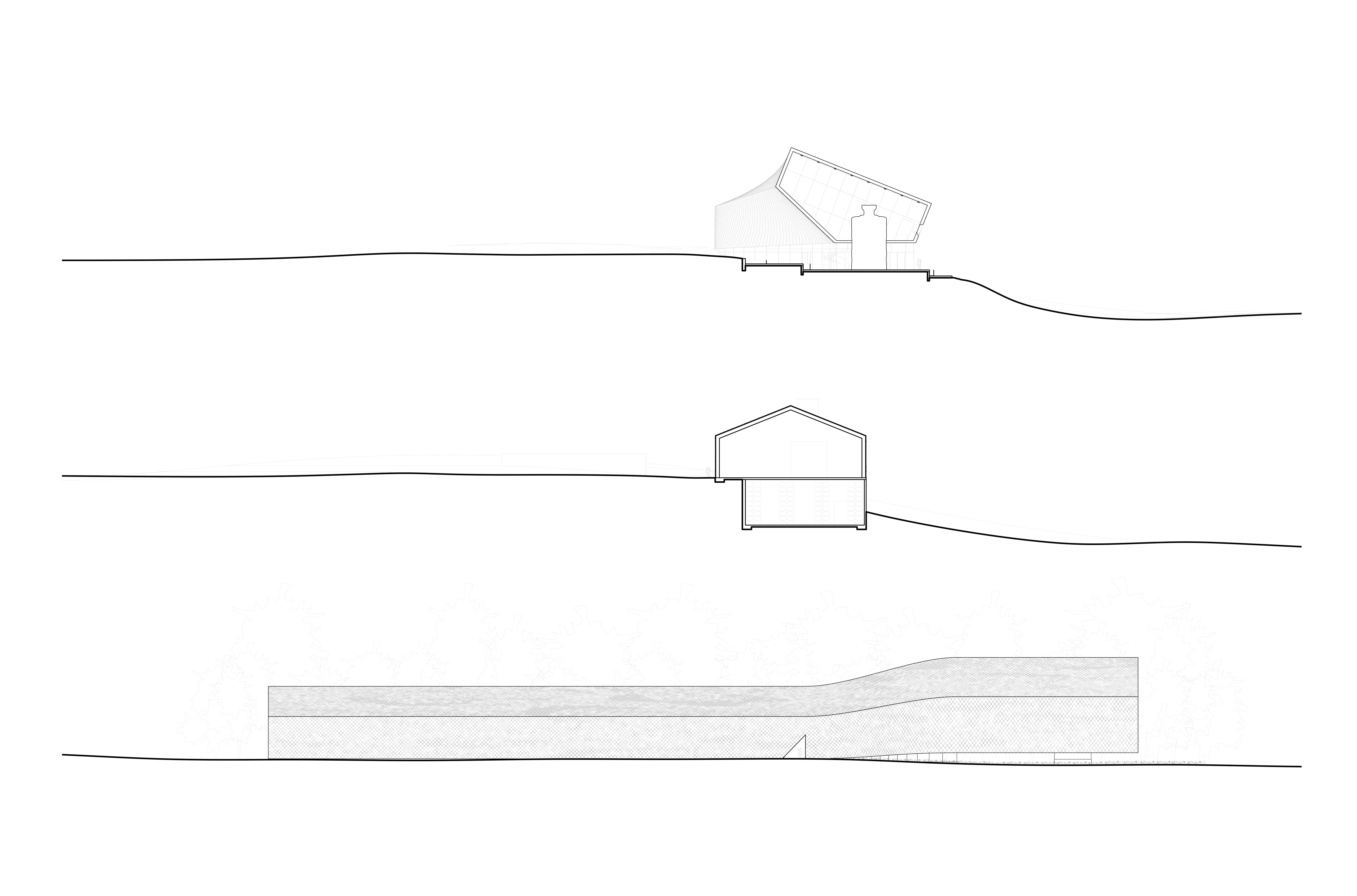
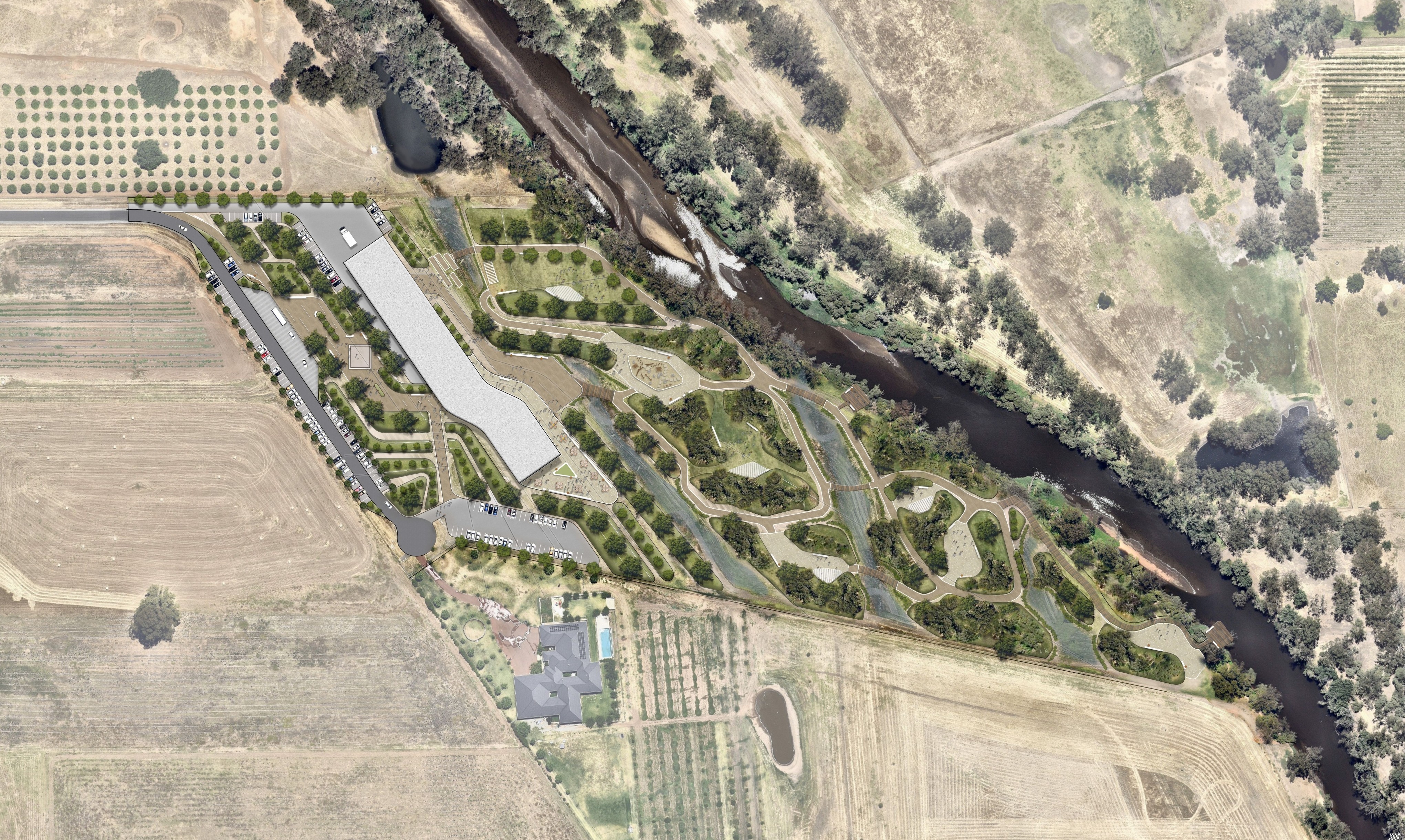

winner award - while at Cumulus Studio Project Architect, 2 stage international competition Perth, Australia designed in 2023, on-going
At first glance, it may seem that the hills and vineyards have held this place forever, steeped in old stories and quiet traditions. But something new stirs among them now: a distillery that does not whisper, but hums with life and possibility. Here, where the Swan Valley’s gentle fields touch clear skies, we asked: How can we share the craft of gin and vodka in a way that feels both rooted and thrillingly fresh?
We looked to the land and its history — its winding river carved by time, the ancient paths of the Whadjuk Nyoongar people, and a quiet colonial heritage. Then we reached for something else: a sense of play, a willingness to twist a familiar shape until it surprises. Out of a simple shed form, we’ve coaxed a space that feels alive, tipping and bending with a spirited nod to the craft inside. It stands as both a landmark and a friendly invitation, catching the eye from afar and asking visitors to step closer, to wonder, to taste.
As guests arrive, they move from sunlight into a series of small, attentive spaces — sheltered nooks that share glimpses of copper stills, shimmering equipment, and quiet corners where botanicals wait for their next chapter. Inside, the design meanders through layers of experience: a tasting room that hints at secret flavors, an open dining terrace that welcomes laughter and lingering conversation, and a hidden nook that feels like a whispered secret between old friends.
Each choice — of shape, material, window, and angle — honors the Swan Valley’s gentle rhythms. There’s no rush, only curiosity and delight. The building’s subtle skin, its gentle twists, its warm interplay of timber and light, all reflect the brand’s spirited character: honest and ambitious, ready to challenge the ordinary. Surrounded by vineyards and distant hills, the distillery becomes a place to gather and sip, to enjoy what has always been here and what is newly made. In every tasting glass and every open door, we welcome the world to discover a story still unfolding.
OUR
WORKS
Featured
Projects
DESIGN
All
Architecture
Public art
Product
Public Light Art
Whale Fall
Winner International 2-stage open call competition Amsterdam, The Netherlands designed in Mar 2024, completed in Nov 2025
We began with a question: what remains when a giant disappears? In deep oceans, a whale’s body sinks and becomes a living reef—life blooming from loss. We carried this quiet lesson to the city, asking how a public artwork might hold memory, invite care, and turn absence into a place to gather.
Working across time zones and disciplines, we listened to the site and its stories—water, trade, migration, tide. In Amsterdam, the installation settles beside Het Scheepvaartmuseum, where the city meets the sea. We mapped wind, pedestrian flows, and reflections on the water. Partners across continents helped refine structure, light, and assembly, so that what arrived was not a spectacle, but a conversation—open, steady, and shared.
The form—rib, spine, and void—frames a room of air. By day, the structure reads as a delicate skeleton, a drawing in space that children can run through and adults can pause within. By night, gentle light traces each line, turning the void into a lantern. The work asks for slower steps: to look up, to listen, to feel the scale of what is missing and the life that might return.
“Whale Fall” is not about a single animal; it is about legacy. It holds space for the city to remember the waters that made it, and to imagine futures made with more care. In this threshold between land and sea, the piece becomes a small commons—an invitation to stand together, to tell stories, and to leave the place a little softer than we found it. Legacy is decided by those who come after.
architecture
black lava field visitor center
Honourable mention award International competition Dimmuborgir, Iceland designed in 2019
At first, we stand before a land shaped by ancient lava and time — dark, twisted towers rising without clear borders, caught between the calm waters of Mývatn and the quiet might of Hverfjall. Here, the challenge is to guide visitors into a place that offers no easy welcome. There are no strong signals, no clear thresholds, only the hushed grandeur of nature’s own design. We asked: How can we honor this landscape, help others see what lies before them, and let them feel the weight of its story?
We listened to the subtle cues of wind and stone, to the folk tales murmured through old paths, and to the quiet requests of travelers who need a place to pause, learn, and breathe. Step by step, the design emerged — sunk low into the earth, out of sight at first, so that one discovers it gently, as though uncovering a secret in the land. The building protects against fierce winds, yet opens to a sweeping view: from the shelter within, visitors can watch volcano and rock formations unfold before their eyes.
Inside, each turn is shaped by care. A curved wall separates the working heart of the center from the public spaces of gathering, sharing, and wonder. Simple materials — basalt stone, warm timber, subtle glass — mirror the surroundings, ensuring the building feels woven into the place rather than set apart. Light and texture guide the way. A gallery shelters quiet stories of the past. A café and children’s corner invite lingering, laughter, and learning. At the far edge, broad windows frame a panorama where nature’s drama plays out in real time.
Finally, visitors step through, drawn toward the “Dark Castles” themselves. As they move into Dimmuborgir, the center’s role slips into the background. It has done its part — offered understanding, comfort, and a gentle gateway. The landscape can now speak for itself, and each traveler departs carrying a richer sense of what these ancient formations mean, not just in form, but in spirit.
Public Art
poldra Public Art
winner award international competition Viseu, Portugal completed 2021
Here, in the quiet heart of Mata do Fontelo, a small crossroads appears between unpaved paths and ancient trees. A place where nature’s whispers mingle with echoes of distant human footsteps. The question we faced: How to invite people to pause, to stand at this gentle intersection, and recognize the bond we share with the living world around us?
We began by listening. We looked closely at the woodland floor and the patterns of light that shift through leaves. We thought about the city beyond, where streets and buildings form their own intersections. Each place, large or small, is a space of meeting—people with people, people with nature, and nature with time. We wanted this installation to reflect that ongoing conversation, a reminder that every path is woven into something larger.
Our proposal rises in four simple forms — four corners that mark out a space of dialogue. Their bright, flame-colored surfaces catch and reflect the changing daylight, and glow softly at night like embers guiding travelers in the forest. Within these four points lies a moment of pause, encouraging visitors to look up and listen, to sense how trees and air, soil and birdsong, all share a quiet story older than any human tongue.
Crafted from locally sourced timber and translucent fabrics, the installation blends with its surroundings and honors the earth it stands upon. Its shape and scale echo an urban crossroads, but here the intersection is open, fluid, and alive. This is a place to consider how we live with nature and how nature lives within us. It asks us to notice the forgotten questions, to rediscover common ground, and to remember that even at a simple forest crossing, we find the world waiting, ready to speak.
Architecture
old young's distillery
winner award - while at Cumulus Studio Project Architect, 2 stage international competition Perth, Australia designed in 2023, on-going
At first glance, it may seem that the hills and vineyards have held this place forever, steeped in old stories and quiet traditions. But something new stirs among them now: a distillery that does not whisper, but hums with life and possibility. Here, where the Swan Valley’s gentle fields touch clear skies, we asked: How can we share the craft of gin and vodka in a way that feels both rooted and thrillingly fresh?
We looked to the land and its history — its winding river carved by time, the ancient paths of the Whadjuk Nyoongar people, and a quiet colonial heritage. Then we reached for something else: a sense of play, a willingness to twist a familiar shape until it surprises. Out of a simple shed form, we’ve coaxed a space that feels alive, tipping and bending with a spirited nod to the craft inside. It stands as both a landmark and a friendly invitation, catching the eye from afar and asking visitors to step closer, to wonder, to taste.
As guests arrive, they move from sunlight into a series of small, attentive spaces — sheltered nooks that share glimpses of copper stills, shimmering equipment, and quiet corners where botanicals wait for their next chapter. Inside, the design meanders through layers of experience: a tasting room that hints at secret flavors, an open dining terrace that welcomes laughter and lingering conversation, and a hidden nook that feels like a whispered secret between old friends.
Each choice — of shape, material, window, and angle — honors the Swan Valley’s gentle rhythms. There’s no rush, only curiosity and delight. The building’s subtle skin, its gentle twists, its warm interplay of timber and light, all reflect the brand’s spirited character: honest and ambitious, ready to challenge the ordinary. Surrounded by vineyards and distant hills, the distillery becomes a place to gather and sip, to enjoy what has always been here and what is newly made. In every tasting glass and every open door, we welcome the world to discover a story still unfolding.
OUR
WORKS
Featured
Projects
DESIGN
All
Architecture
Public art
Product
Public Light Art
Whale Fall
Winner International 2-stage open call competition Amsterdam, The Netherlands designed in Mar 2024, completed in Nov 2025
We began with a question: what remains when a giant disappears? In deep oceans, a whale’s body sinks and becomes a living reef—life blooming from loss. We carried this quiet lesson to the city, asking how a public artwork might hold memory, invite care, and turn absence into a place to gather.
Working across time zones and disciplines, we listened to the site and its stories—water, trade, migration, tide. In Amsterdam, the installation settles beside Het Scheepvaartmuseum, where the city meets the sea. We mapped wind, pedestrian flows, and reflections on the water. Partners across continents helped refine structure, light, and assembly, so that what arrived was not a spectacle, but a conversation—open, steady, and shared.
The form—rib, spine, and void—frames a room of air. By day, the structure reads as a delicate skeleton, a drawing in space that children can run through and adults can pause within. By night, gentle light traces each line, turning the void into a lantern. The work asks for slower steps: to look up, to listen, to feel the scale of what is missing and the life that might return.
“Whale Fall” is not about a single animal; it is about legacy. It holds space for the city to remember the waters that made it, and to imagine futures made with more care. In this threshold between land and sea, the piece becomes a small commons—an invitation to stand together, to tell stories, and to leave the place a little softer than we found it. Legacy is decided by those who come after.
architecture
black lava field visitor center
Honourable mention award International competition Dimmuborgir, Iceland designed in 2019
At first, we stand before a land shaped by ancient lava and time — dark, twisted towers rising without clear borders, caught between the calm waters of Mývatn and the quiet might of Hverfjall. Here, the challenge is to guide visitors into a place that offers no easy welcome. There are no strong signals, no clear thresholds, only the hushed grandeur of nature’s own design. We asked: How can we honor this landscape, help others see what lies before them, and let them feel the weight of its story?
We listened to the subtle cues of wind and stone, to the folk tales murmured through old paths, and to the quiet requests of travelers who need a place to pause, learn, and breathe. Step by step, the design emerged — sunk low into the earth, out of sight at first, so that one discovers it gently, as though uncovering a secret in the land. The building protects against fierce winds, yet opens to a sweeping view: from the shelter within, visitors can watch volcano and rock formations unfold before their eyes.
Inside, each turn is shaped by care. A curved wall separates the working heart of the center from the public spaces of gathering, sharing, and wonder. Simple materials — basalt stone, warm timber, subtle glass — mirror the surroundings, ensuring the building feels woven into the place rather than set apart. Light and texture guide the way. A gallery shelters quiet stories of the past. A café and children’s corner invite lingering, laughter, and learning. At the far edge, broad windows frame a panorama where nature’s drama plays out in real time.
Finally, visitors step through, drawn toward the “Dark Castles” themselves. As they move into Dimmuborgir, the center’s role slips into the background. It has done its part — offered understanding, comfort, and a gentle gateway. The landscape can now speak for itself, and each traveler departs carrying a richer sense of what these ancient formations mean, not just in form, but in spirit.
Public Art
poldra Public Art
winner award international competition Viseu, Portugal completed 2021
Here, in the quiet heart of Mata do Fontelo, a small crossroads appears between unpaved paths and ancient trees. A place where nature’s whispers mingle with echoes of distant human footsteps. The question we faced: How to invite people to pause, to stand at this gentle intersection, and recognize the bond we share with the living world around us?
We began by listening. We looked closely at the woodland floor and the patterns of light that shift through leaves. We thought about the city beyond, where streets and buildings form their own intersections. Each place, large or small, is a space of meeting—people with people, people with nature, and nature with time. We wanted this installation to reflect that ongoing conversation, a reminder that every path is woven into something larger.
Our proposal rises in four simple forms — four corners that mark out a space of dialogue. Their bright, flame-colored surfaces catch and reflect the changing daylight, and glow softly at night like embers guiding travelers in the forest. Within these four points lies a moment of pause, encouraging visitors to look up and listen, to sense how trees and air, soil and birdsong, all share a quiet story older than any human tongue.
Crafted from locally sourced timber and translucent fabrics, the installation blends with its surroundings and honors the earth it stands upon. Its shape and scale echo an urban crossroads, but here the intersection is open, fluid, and alive. This is a place to consider how we live with nature and how nature lives within us. It asks us to notice the forgotten questions, to rediscover common ground, and to remember that even at a simple forest crossing, we find the world waiting, ready to speak.
Architecture
old young's distillery
winner award - while at Cumulus Studio Project Architect, 2 stage international competition Perth, Australia designed in 2023, on-going
At first glance, it may seem that the hills and vineyards have held this place forever, steeped in old stories and quiet traditions. But something new stirs among them now: a distillery that does not whisper, but hums with life and possibility. Here, where the Swan Valley’s gentle fields touch clear skies, we asked: How can we share the craft of gin and vodka in a way that feels both rooted and thrillingly fresh?
We looked to the land and its history — its winding river carved by time, the ancient paths of the Whadjuk Nyoongar people, and a quiet colonial heritage. Then we reached for something else: a sense of play, a willingness to twist a familiar shape until it surprises. Out of a simple shed form, we’ve coaxed a space that feels alive, tipping and bending with a spirited nod to the craft inside. It stands as both a landmark and a friendly invitation, catching the eye from afar and asking visitors to step closer, to wonder, to taste.
As guests arrive, they move from sunlight into a series of small, attentive spaces — sheltered nooks that share glimpses of copper stills, shimmering equipment, and quiet corners where botanicals wait for their next chapter. Inside, the design meanders through layers of experience: a tasting room that hints at secret flavors, an open dining terrace that welcomes laughter and lingering conversation, and a hidden nook that feels like a whispered secret between old friends.
Each choice — of shape, material, window, and angle — honors the Swan Valley’s gentle rhythms. There’s no rush, only curiosity and delight. The building’s subtle skin, its gentle twists, its warm interplay of timber and light, all reflect the brand’s spirited character: honest and ambitious, ready to challenge the ordinary. Surrounded by vineyards and distant hills, the distillery becomes a place to gather and sip, to enjoy what has always been here and what is newly made. In every tasting glass and every open door, we welcome the world to discover a story still unfolding.
Our clients and collaborators:
Our clients and collaborators:
Our clients and collaborators:
We work with cities, museums, councils, engineers, fabricators, and communities to co-design thoughtful, site-specific works—from first questions to a quiet, resolved ending, again and again.

Amsterdam Light Festival
HR
Amsterdam Light Festival
HR
ABOUT US
we are listeners, explorers, and storytellers who shape spaces from the unknown. Beginning with a single question, we wander into unfamiliar territory, gathering whispers of need, memory, and place. We don’t cling to preconceptions; instead, we discover new paths through careful research and gentle collaboration. each project grows from many voices, forging connections between people, ideas, and the lands they inhabit. We believe design lives everywhere — in the curve of a spoon, the play of light at dusk, the silence between words — and that our role is to help these subtle truths find their rightful form.
Xinyi
Xinyi Wang
Founder
Born in Beijing and shaped by years of living and working across Australia, Europe, Japan, and China, Xinyi approaches design and architecture as both a curious observer and a thoughtful creator. residing in sydney, yet his work transcends borders, reflecting a restless curiosity and a quiet faith in the unknown. His portfolio, ranging from stadiums, distilleries, museums, skyscrapers, to public art, furniture, and products — shows a willingness to embrace complexity, to listen carefully to each place and its stories. As both an architect and artist, Xinyi’s process is tender yet rigorous, weaving research, poetry, and craft into forms that welcome surprise. His fascination lies in life’s odd corners and half-lit spaces, where imagination and inquiry step forward hand in hand. In his work, subtle ideas find room to breathe, growing into designs that feel both honest and alive.
actively involved in architectural education internationally, xinyi began his teaching journey as a tutor for first-year design studio at the University of Western Australia. Since 2020, he has taught final-year Bachelor and Master’s students in architectural technology and computational design at the University of Sydney, while also serving as a guest lecturer and critic for programs at the University of Sydney and Western Sydney University.
Passionate about innovation, Xinyi bridges traditional architectural practices with cutting-edge advancements. His work in the metaverse has earned awards and inspired workshops and CPD sessions across Australia, including Tasmania, Sydney, the National Institute, and internationally at Harbin Institute of Technology.
Always forward-thinking, Xinyi explores AI-assisted design, embracing co-creation in an age shaped by artificial intelligence. His work weaves technology and creativity, crafting designs that connect the future with the human experience.

actively involved in architectural education internationally, xinyi began his teaching journey as a tutor for first-year design studio at the University of Western Australia. Since 2020, he has taught final-year Bachelor and Master’s students in architectural technology and computational design at the University of Sydney, while also serving as a guest lecturer and critic for programs at the University of Sydney and Western Sydney University.
Passionate about innovation, Xinyi bridges traditional architectural practices with cutting-edge advancements. His work in the metaverse has earned awards and inspired workshops and CPD sessions across Australia, including Tasmania, Sydney, the National Institute, and internationally at Harbin Institute of Technology.
Always forward-thinking, Xinyi explores AI-assisted design, embracing co-creation in an age shaped by artificial intelligence. His work weaves technology and creativity, crafting designs that connect the future with the human experience.